One Slip and Our New Sawmill Falls Into the Water!
This episode is pure Off Grid Island Build reality — a long road back, unexpected delays, brutal washboard roads with a trailer that has zero suspension, and then the biggest test: transferring the mill from trailer to barge using gravity, straps, wood blocks, and a whole lot of patience. 😳⚙️
Table of Contents
- Off Grid Island Build Recap with Off Grid Island Build context
- Highway 97 Road Closure and Drone Battery Incident
- Brutal Road and Trailer Without Suspension
- Prepping the Barge Transfer: Portable Sawmill Setup
- Controlled Roll: Ratchet Straps and Runaway Prevention
- Sketchy Ramp Transitions and Stabilizing the Jacks
- Final Transfer: Mill Securely on the Barge
- Practical Takeaways for Similar Moves
- Where to Find Gear and Our Social Links
- Final Thoughts
Off Grid Island Build Recap with Off Grid Island Build context

We bought a remote wilderness island sight unseen in British Columbia and set out to build a functioning homestead. Getting heavy equipment and a barge out there has been one of the keystone moves for the project. Our goal is simple: be more self-reliant, mill our own lumber, and keep moving toward a comfortable off-grid life.
Bringing a used Norwood sawmill across the country and onto the island meant planning for everything from road closures to wet ramps. From that perspective, the trip was less about speed and more about doing things right — slow adjustments, redundancy, and constant checks. We knew this would be hands-on homestead work, and we embraced it. Early on we also learned that careful planning for an Island Homestead or Remote Island Homestead often means designing safety into each step.
Highway 97 Road Closure and Drone Battery Incident
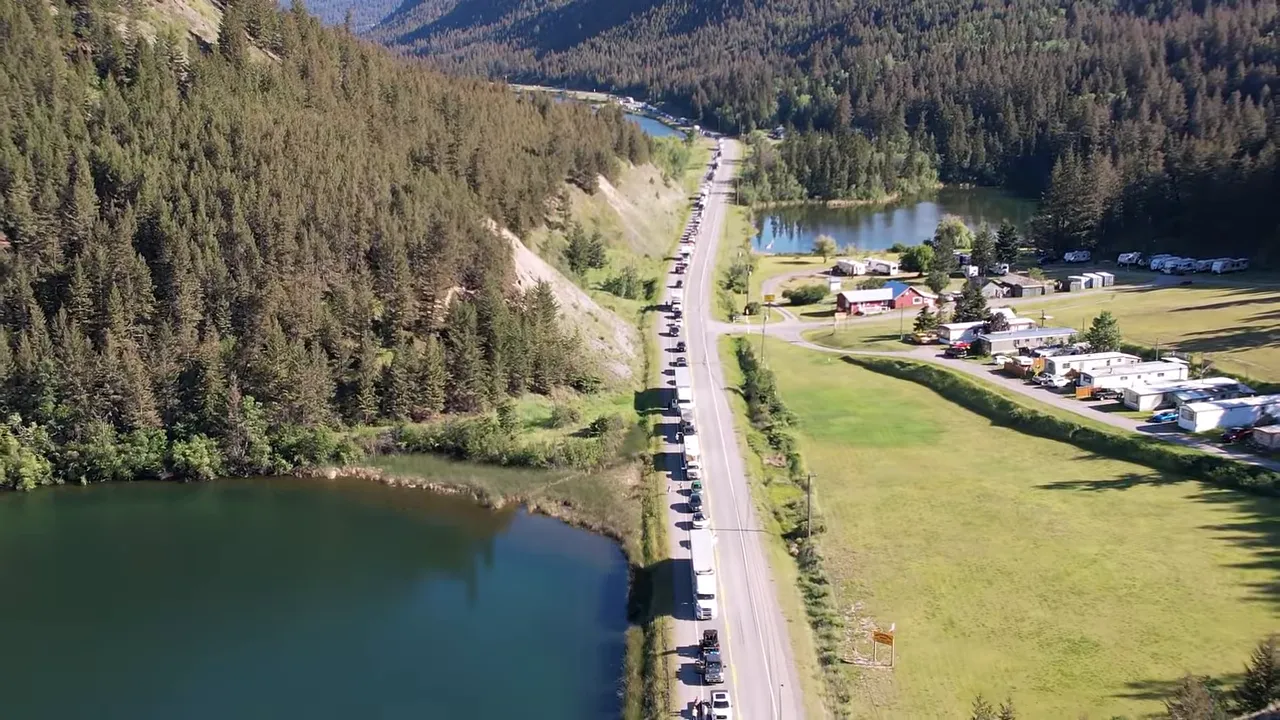
An unexpected closure on Highway 97 ground traffic to a halt for hours. We used a drone as our “eyes in the sky” to size up the mess, only to get that heart-skip: a low battery warning as the drone was a few hundred meters away. It was a reminder to always top off equipment and to expect delays on long hauls. Patience is part of the toolkit when you’re living an Off Grid Life.
Four hours stuck in line turned into five plus, and other folks had been waiting far longer. We rescheduled a hotel night, rested, and refocused on safety. These hold-ups are part of building something real; they force you to slow down and to be conservative with every load-check and strap-tightening move.
Brutal Road and Trailer Without Suspension
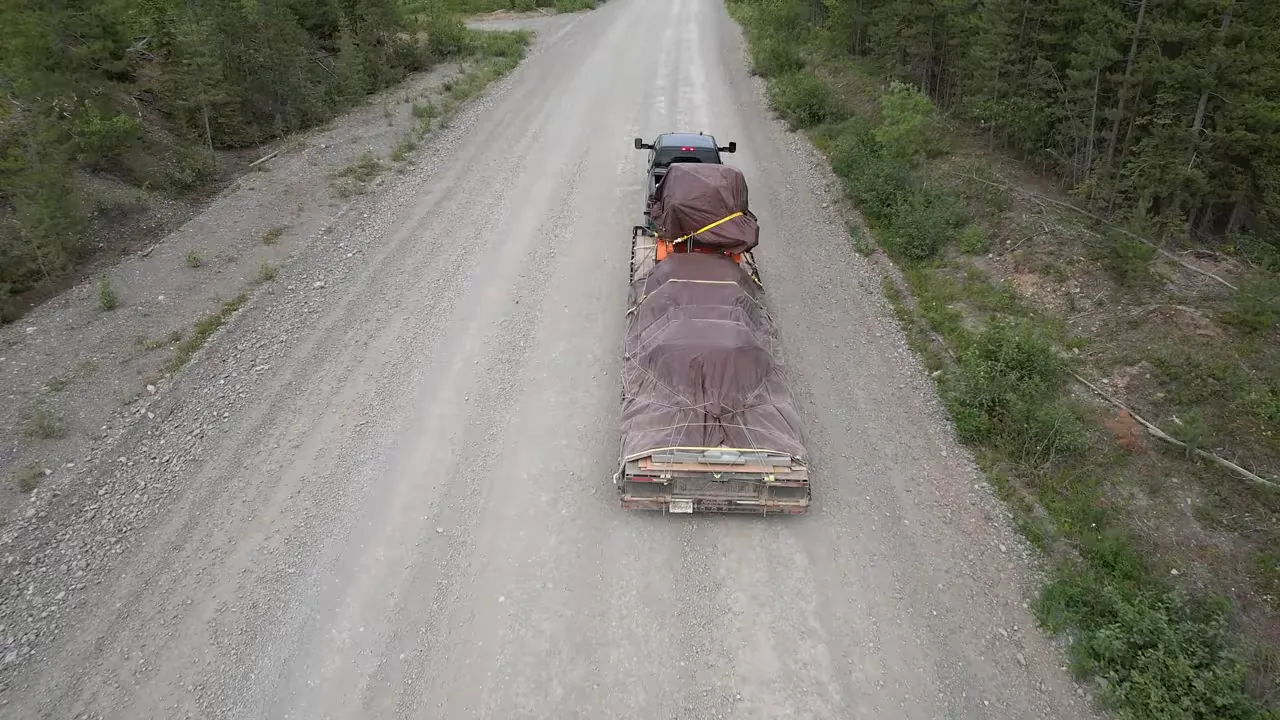
The road itself was brutal — a washboard of bone-shaking lumps. Our trailer essentially has zero suspension, which meant the wheels feel welded to the frame. That reality dictated our pace: crawl, stop, inspect, tighten straps, repeat. Movement becomes a process more than a transit, especially when hauling a heavy machine that we cannot afford to lose.
We treated each bump as an event that could shift cargo. That mindset — constant monitoring and redundancy — is exactly what makes living Off Grid Living Canada feasible. There’s no tow truck two miles in when things go sideways out here, so we built contingency measures into every move.
Prepping the Barge Transfer: Portable Sawmill Setup
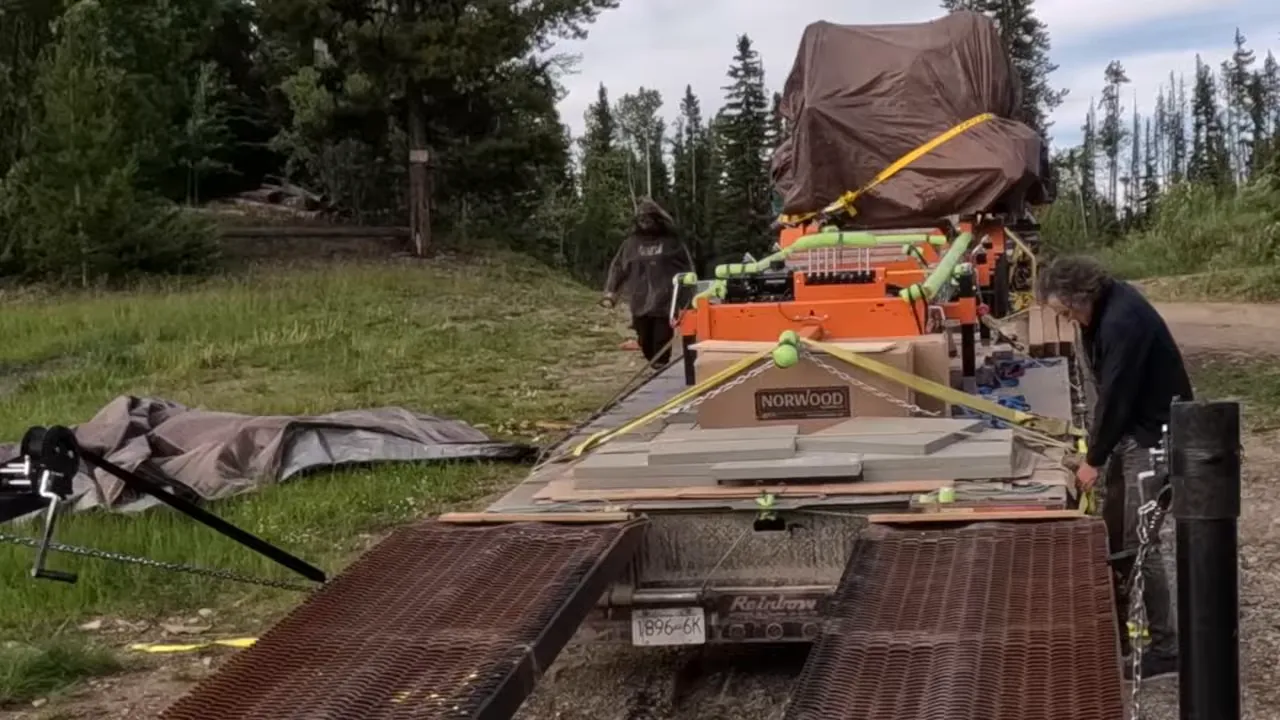
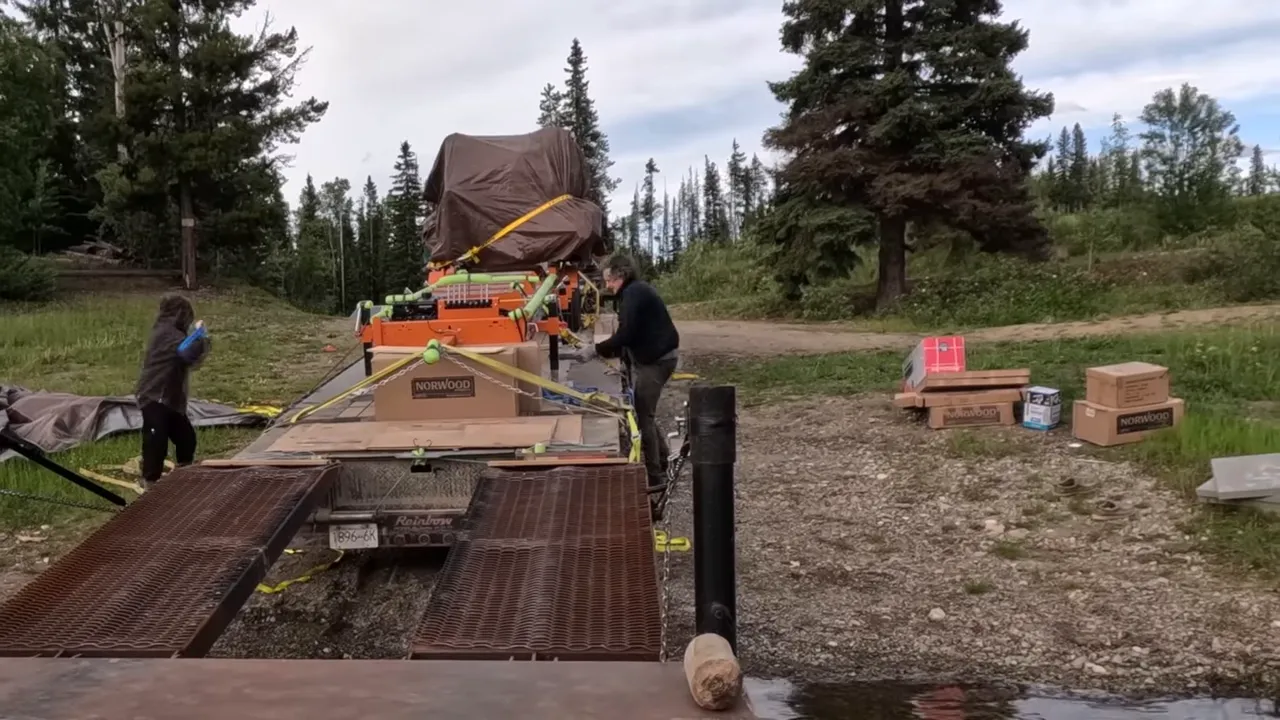
At the launch we set up with multiple ratchet straps, tied the barge to the shore, and used midship bollards to hold alignment. The mill came wrapped like a “world’s biggest burrito” and contained many boxes of spare parts, blades, and hydraulics — the latter to reduce manual lifting once the mill is operational.
We raised the mill’s support legs to shift weight onto the front wheel jacks and rear tires, then created an emergency block out of a four by four as a last resort. Redundancy like that is the backbone of any successful heavy move; it’s how we keep the mill from becoming an expensive swimming lesson.
Controlled Roll: Ratchet Straps and Runaway Prevention
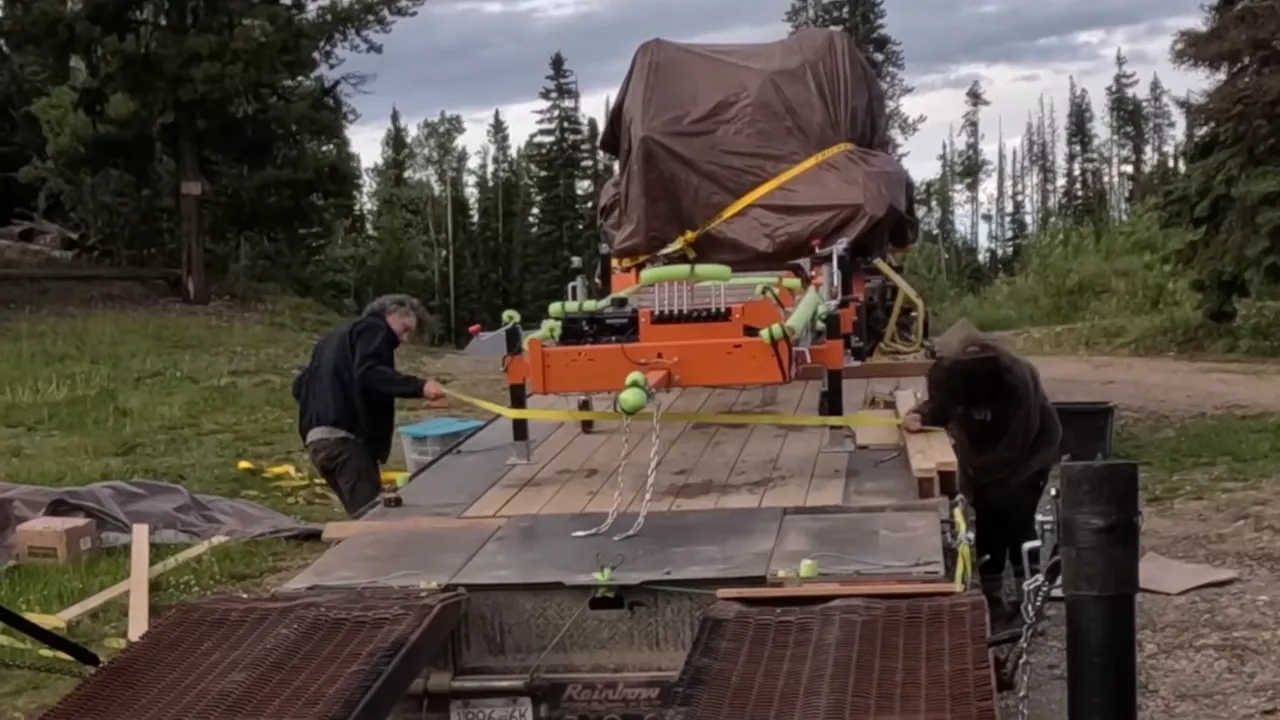
Moving the mill down the trailer had to be done inch by inch. We used multiple ratchet straps in tandem and set up a backstop block in the event of strap failure. Those front wheel jacks took a huge portion of the load, and they required additional bracing so they wouldn’t twist off under pressure.
At moments it felt like a delicate musical of straps, timber, and leverage. We had to take long breaks, reassess, and return with fresh energy. Our approach was never one big pull; it was many small, controlled moves with contingency for each step. That level of care is what makes heavy equipment moves manageable on an Island Homestead.
Sketchy Ramp Transitions and Stabilizing the Jacks
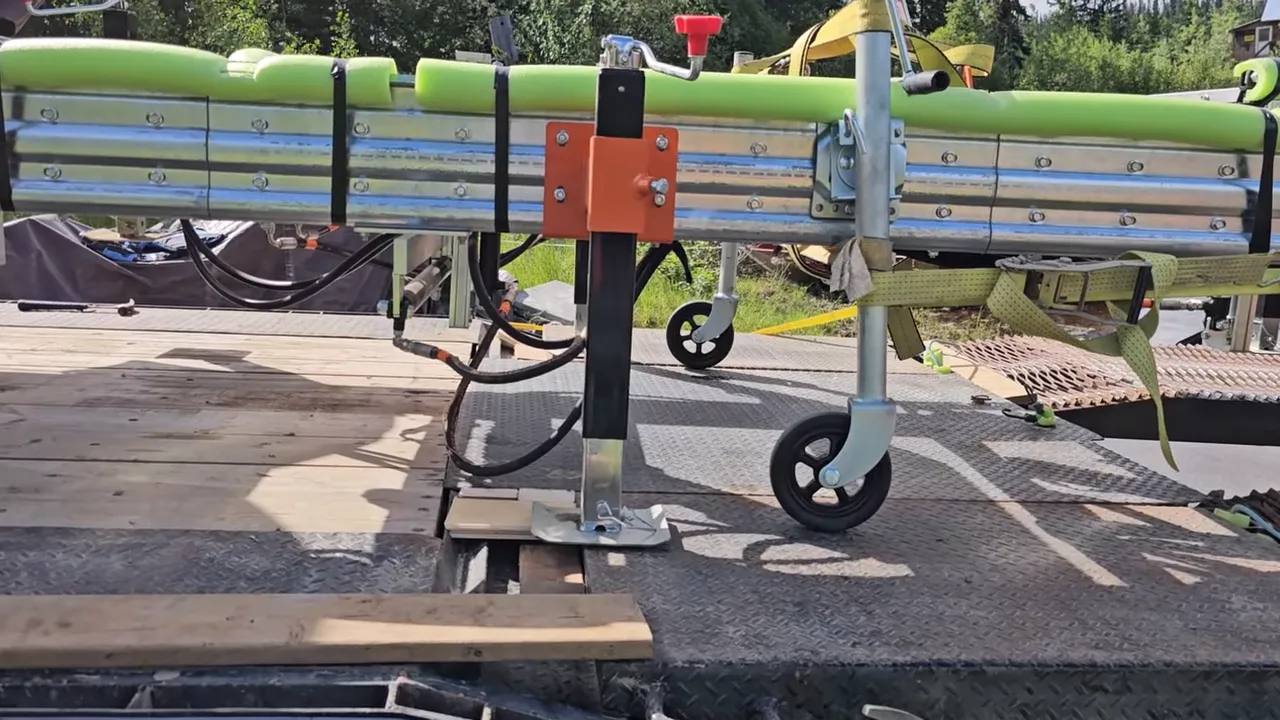
The ramp transitions were the scariest part: small ridges and dents that could snag the jack wheels or shift the whole machine sideways. We placed wood ramps, adjusted screw jacks to keep everything plumb, and tapped the mill into place rather than forcing it. When one of the legs failed, that emergency four by four saved us from a runaway situation.
Slow, deliberate lifts kept us from exceeding the limited ratings of our straps or the fragile jacks. We learned the value of plumbing the jacks correctly and creating temporary skids and stepping boards to smooth the metal-to-wood transitions. Little improvisations like that add up to safe outcomes when moving heavy gear.
Final Transfer: Mill Securely on the Barge
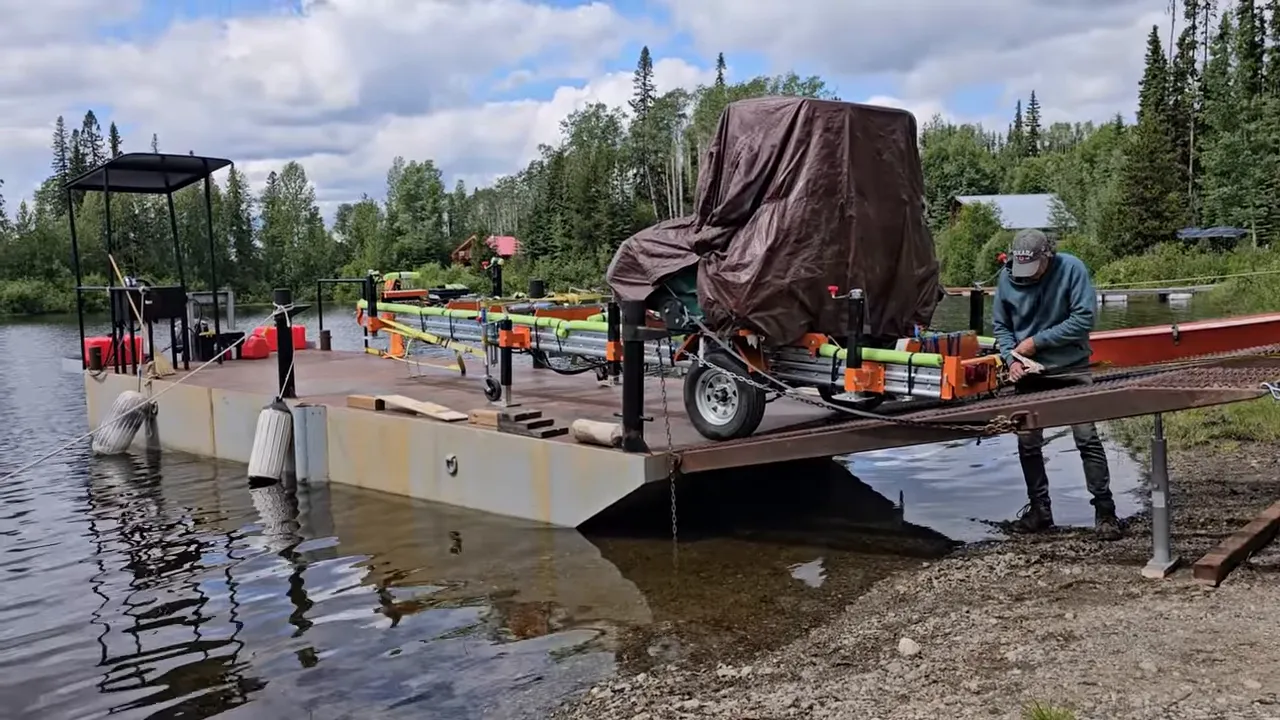
After a full day of inching, cutting, and jacking, we rolled the mill onto the barge with only a couple inches to spare. It was nerve-racking and exhausting, but in the end the machine survived the trip intact. We were relieved to see no scraping and no major damage — a payoff for the careful, patient approach.
We reflected on alternate methods that might have made the move quicker: an ATV winch or a boom lift could have sped things, but we didn’t have those options. Instead we relied on patience, redundancy, and some good old-fashioned problem-solving. This experience reinforced our belief that with perseverance and safety-first thinking you can tackle difficult tasks on an Off Grid Island Build.
Practical Takeaways for Similar Moves
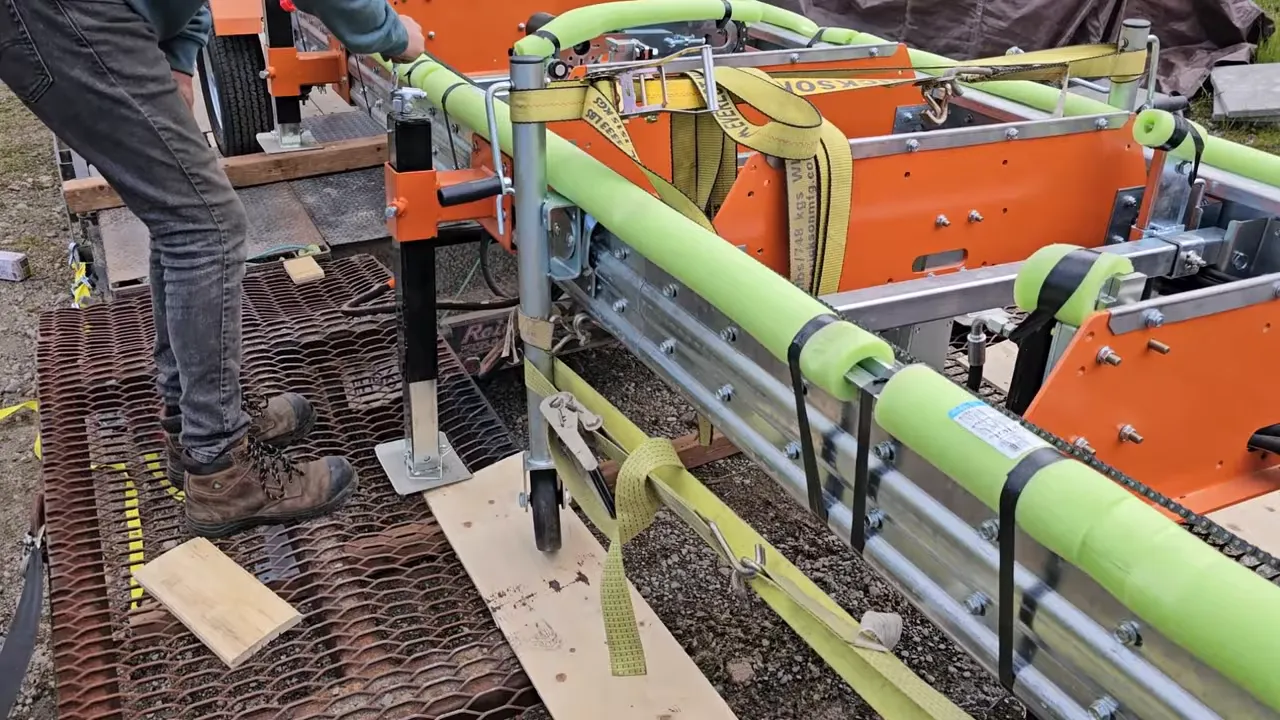
When you’re planning a heavy move to a remote site, consider these core principles:
- Plan for redundancy. Use backup blocks, straps, and multiple anchor points.
- Expect delays. Pack extra time, batteries, and patience for unexpected road or equipment issues.
- Stabilize jacks and ramps. Proper plumbing and timber skids reduce the risk of snagging or tipping.
- Protect the investment. Constantly check straps and hardware on washboard roads.
Applying these measures will help when you move a Portable Sawmill or other heavy equipment to a remote Cabin Life Canada location.
Where to Find Gear and Our Social Links
We keep a running list of favorite gear and a store of tools we use. Favorite Things: https://mywildholm.com/favorite-things/ Amazon store: https://amzn.to/4rE3ER3 Merch: https://www.youtube.com/@mywildholm/store Facebook: https://www.facebook.com/mywildholm
Final Thoughts
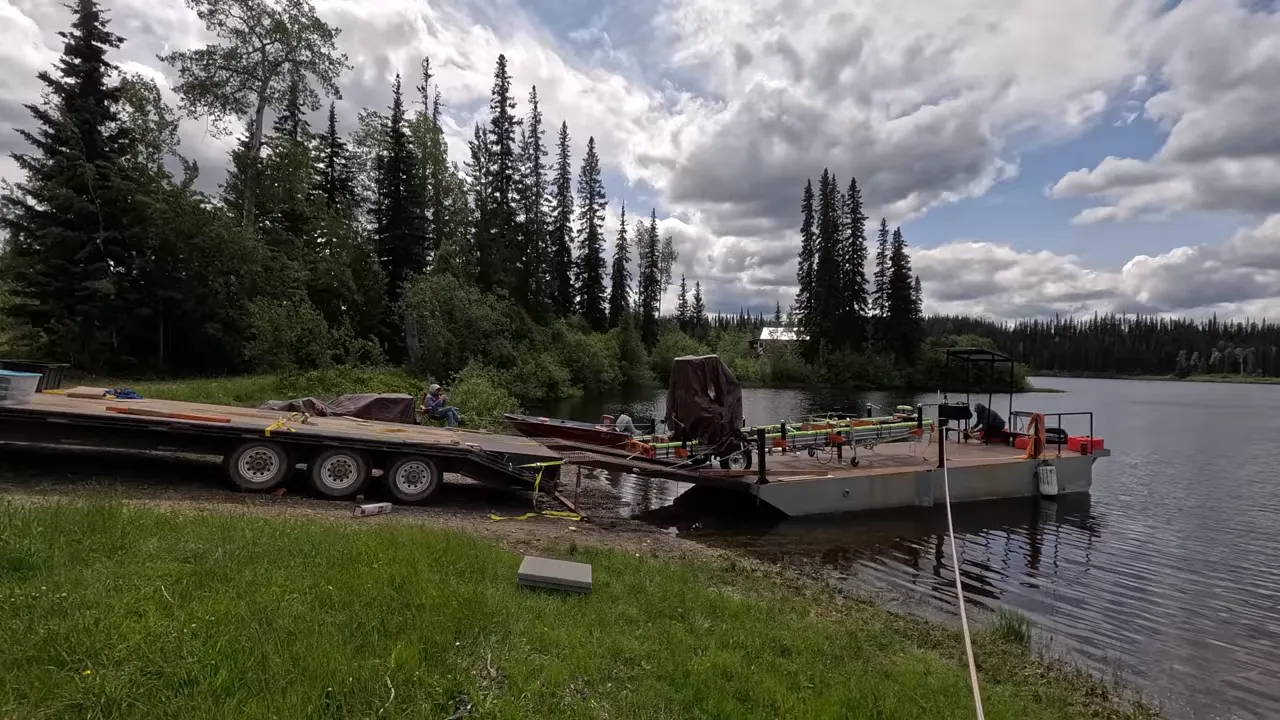
Putting the sawmill on the barge was one of those intense, hands-on moments that test planning and patience. It also reminded us that building a self-reliant homestead includes a lot of improvisation. Each protective measure we put in place reduced risk and helped us succeed. We’re now ready for the next step: unloading on the island and getting the mill running so we can mill our own lumber and continue building our remote home.
Tags: #Off Grid Island Build #Off Grid Life #Remote Island Homestead #Off Grid Living Canada #Portable Sawmill #Island Homestead #Homestead Life #Self Reliance #Living Off Grid #Cabin Life Canada.