Off Grid Island Build: 14½ Hours for a Sawmill?! Our Biggest Upgrade Yet
We’re gearing up for a long trip off the island — 14½ hours of barges, boats, forest roads, ferries, and highways — all to bring home a sawmill we’ve been dreaming about for months. Before we leave, we’re getting the cabin wrapped up, the greenhouse watering system dialed in, and everything secured so the island can look after itself for a few days away.
Table of Contents
- Table of Contents
- A Look Back: Why We Chose a remote island homestead
- Buttoning Up the Cabin & Greenhouse Watering
- Low Water & Getting the barge Unstuck
- The 14½-Hour Mission: Ferries, Forest Roads, and Logistics
- Prepping the Norwood sawmill for Transport
- Berries, Ramps, and Wrestling the sawmill Into Place
- Securing the Load, Family Time, and Leaving the Island
Table of Contents
- A Look Back: Why We Chose a remote island homestead
- Buttoning Up the Cabin & Greenhouse Watering
- Low Water & Getting the barge Unstuck
- The 14½-Hour Mission: Ferries, Roads, and Logistics
- Prepping the Norwood sawmill for Transport
- Berries, Ramps, and Wrestling the sawmill Into Place
- Securing the Load, Family Time, and Leaving the Island
A Look Back: Why We Chose a remote island homestead
We wanted distance, hands-on work, and a place where each project matters. Buying an island sight unseen forced us to accept imperfection and embrace improvisation. The old barge we hauled across the country became more than a tool; it became a lifeline to the mainland and our supply chain.
Buttoning Up the Cabin & Greenhouse Watering
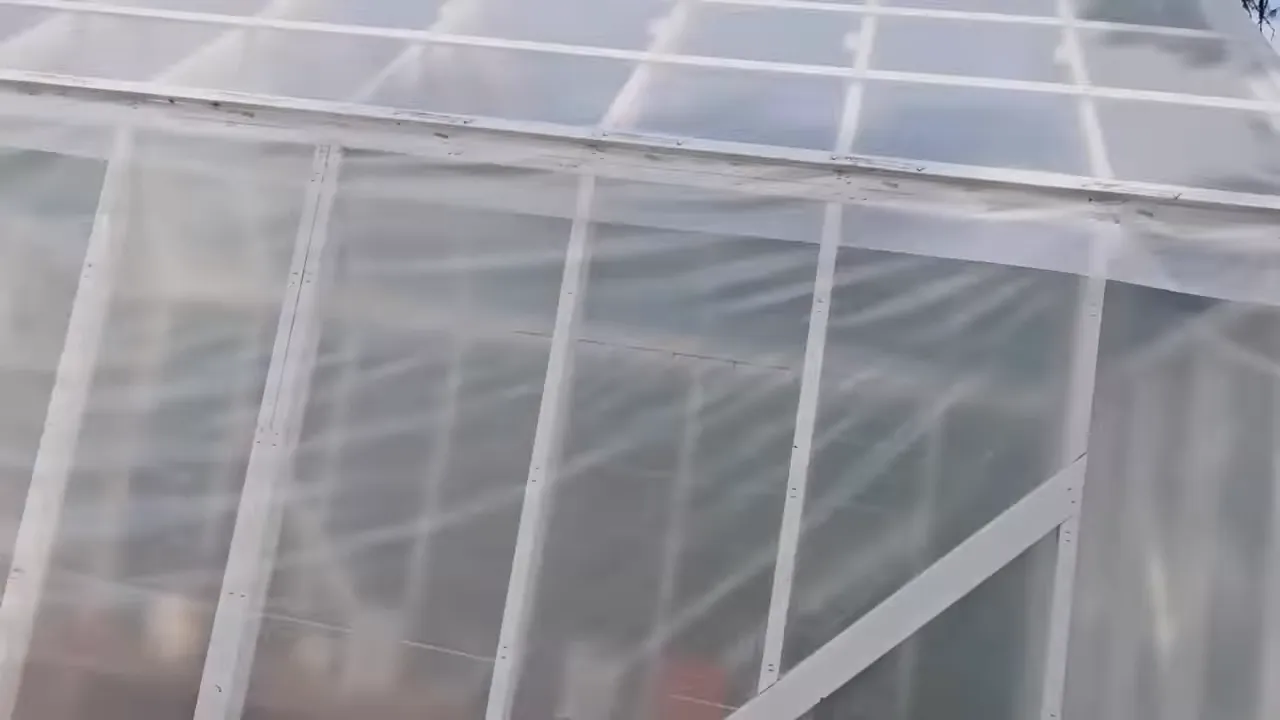
Before any long trip, we lock things down so the homestead can mind itself for a few days. Scaffolding went up on the cabin, lavender beds got a final trim, and we finished the greenhouse’s automated watering. Our little solar-driven pump with a pressure sensor keeps things hydrated on rotation, which is a lifesaver when we’re away.
Low Water & Getting the barge Unstuck
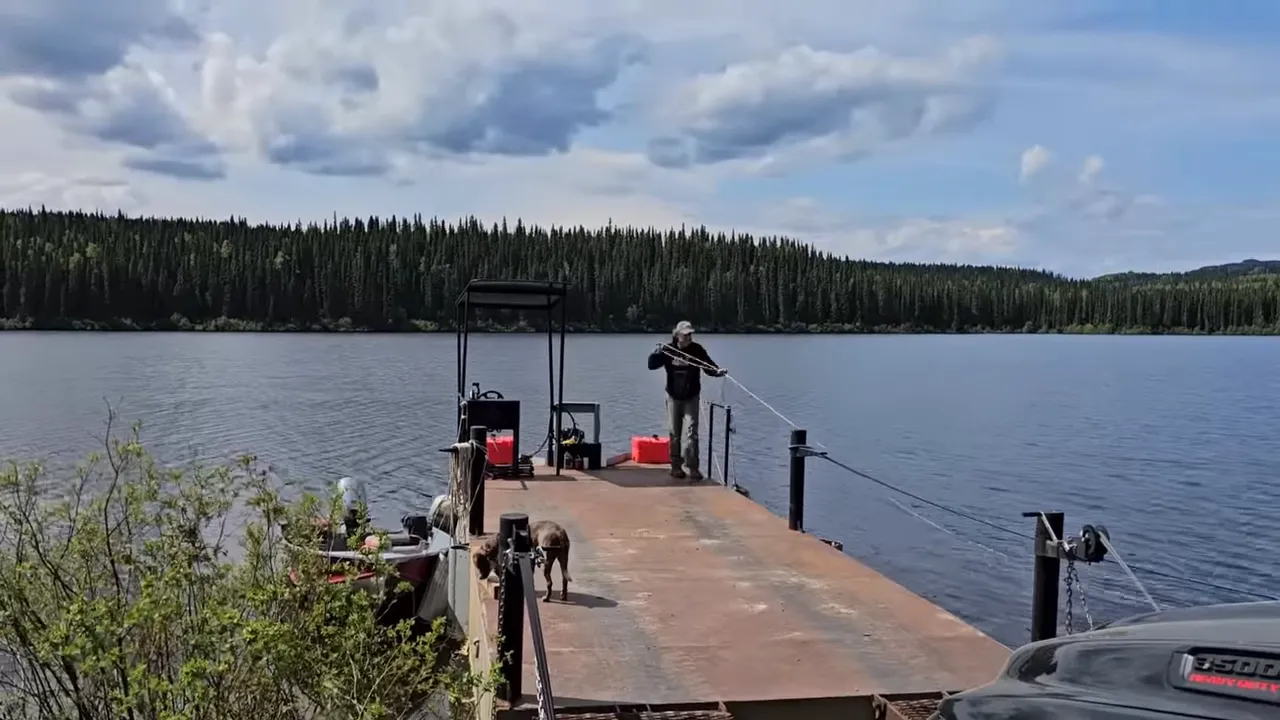
Shallow water at the landing can create a suction that pins the barge to the mud. Instead of panicking, we tested movement side to side to break the grip. Leaving a bow line on made shore maneuvers much more controllable, and dropping the ramps early turned out to function like anchors. Small, deliberate steps kept everything safe — including Opal, who is surprisingly nimble when the ramps start moving.
The 14½-Hour Mission: Ferries, Forest Roads, and Logistics

Getting off the island for a long-haul errand is a multi-step chess game. We load the truck onto the barge, haul it across to deeper water, and then return the barge to its mooring so the wind doesn’t drag it off. One of us drives the truck through a sketchy stretch of forest road while the other races back across the lake in the boat to rendezvous. That stretch has tight corners, cliffside drops, and fallen trees — so an electric chainsaw lives in the truck for good reason.
Prepping the Norwood sawmill for Transport
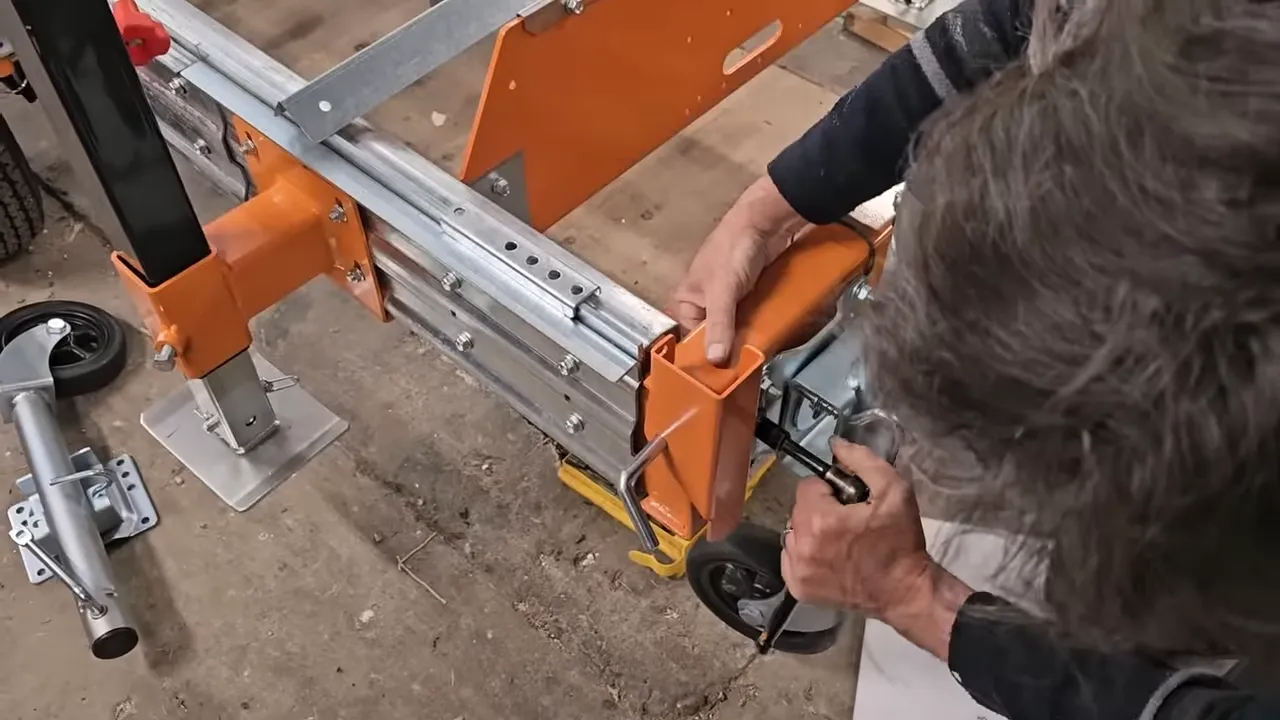
Bringing a Norwood mill home required careful forethought. We added temporary wheels, removed a taillight for access to bolt holes, and assembled spare parts so nothing stalls once we reach the island. Leveling jacks under the mill make it possible to true the rails later. Before the long drive, we test-fired and inspected the hydraulics, chain, and blade mounts so we wouldn’t arrive missing a vital fitting.
Berries, Ramps, and Wrestling the sawmill Into Place
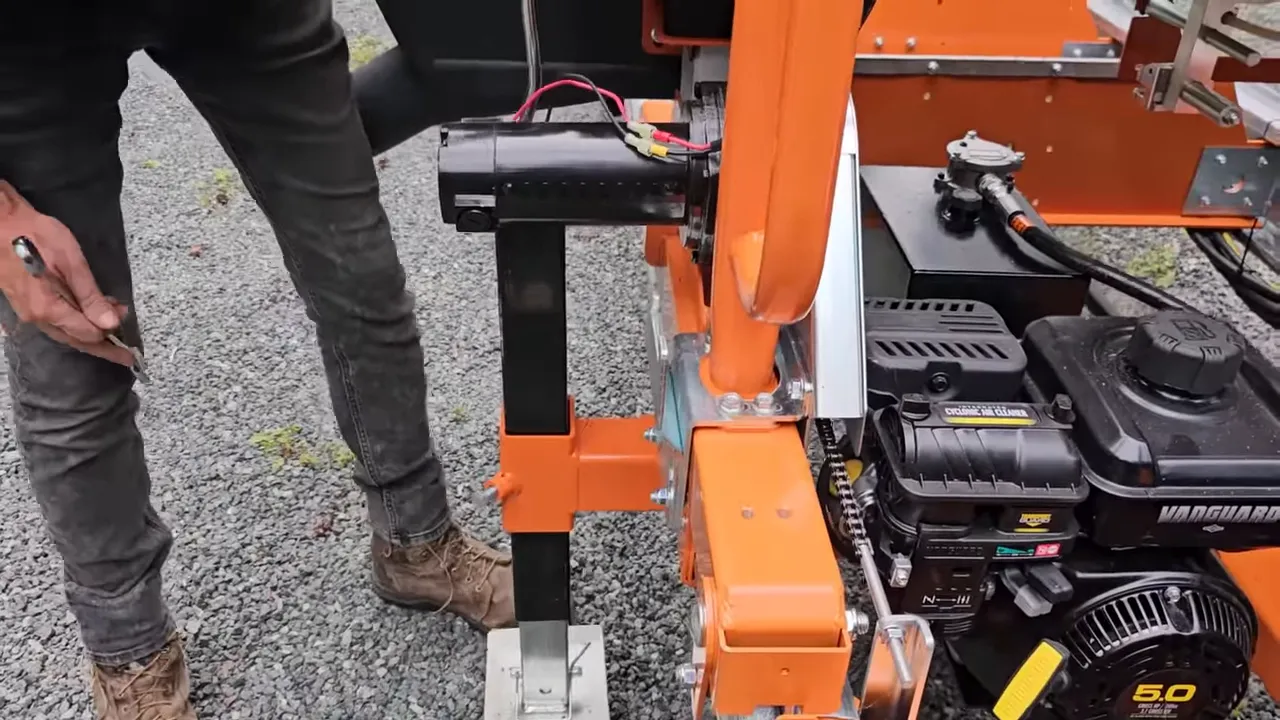
Getting the mill onto the trailer was a messy, sweaty process. We used planks as makeshift ramps and discovered small things can stop big progress — a spring, a bolt, or a cramped wheel well. With patient adjustments, a few kicks, and steady ratchet-strapping, the mill inched up the trailer. Along the way, we stopped to harvest ripe thimbleberries — a reminder that even heavy work has its sweet moments.
Securing the Load, Family Time, and Leaving the Island
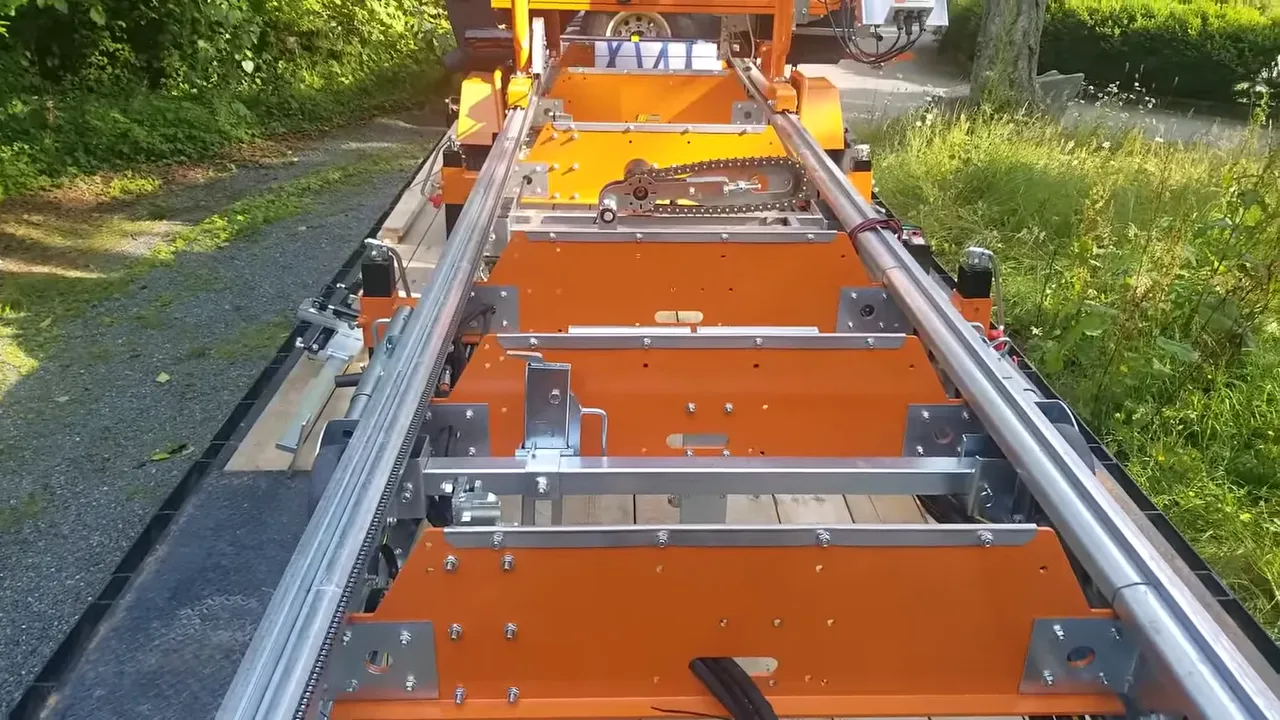
Once the mill was strapped, we protected all sharp edges with pool noodles and tucked foam under supports so the tarp survives the highway wind. Trailer jacks helped plan for unloading at the island ramp. With hydraulics plumbed and spare pieces on board, we finally packed up. Our last night included a salmon dinner with family — comforting company before we headed back north to integrate the new sawmill into our homestead work.
Practical takeaways for homesteaders and tiny cabin builders
- Plan for the last mile. Transporting heavy equipment to remote sites needs tailored ramps, extra jacks, and protective padding.
- Redundancy pays. Keep spare fittings, bolts, and a small tool kit on every trip.
- Automate where it counts. Simple solar-driven watering systems let gardens thrive while we’re gone.
- Respect local conditions. Low water, wind, and forest roads change plans fast; build flexibility into the schedule.
Bringing a sawmill home wasn’t a single event; it was a string of small wins stitched together by planning and patience. The mill opens a new chapter for our cabin build and will let us mill our own lumber for repairs and future projects. For anyone imagining offgrid life or a remote island homestead, remember: the big upgrades arrive one careful step at a time, and they reward hands-on problem solving.