Off Grid Island Build: Three Days to Get the Sawmill Off the Barge
In the spring of 2022, we bought a remote wilderness island sight unseen on a lake in British Columbia. We drove across the country to pick up an old barge, and now we’re building a homestead.
Table of Contents
- Introduction
- How are we going to do this? — Beaching and approach planning
- Every Sawmill Needs… Pool Noodles — Protecting gear and prepping
- Melodi Goes All In — Working with water and pumps
- Deploying the Boom Lift — When big lifts meet tricky angles
- We’re Done! — Knowing when to stop and reassess
- Plan B and Plan C — Tool swaps, blocking, and finishing the pull
- Sources and Notes
How are we going to do this? — Beaching and approach planning
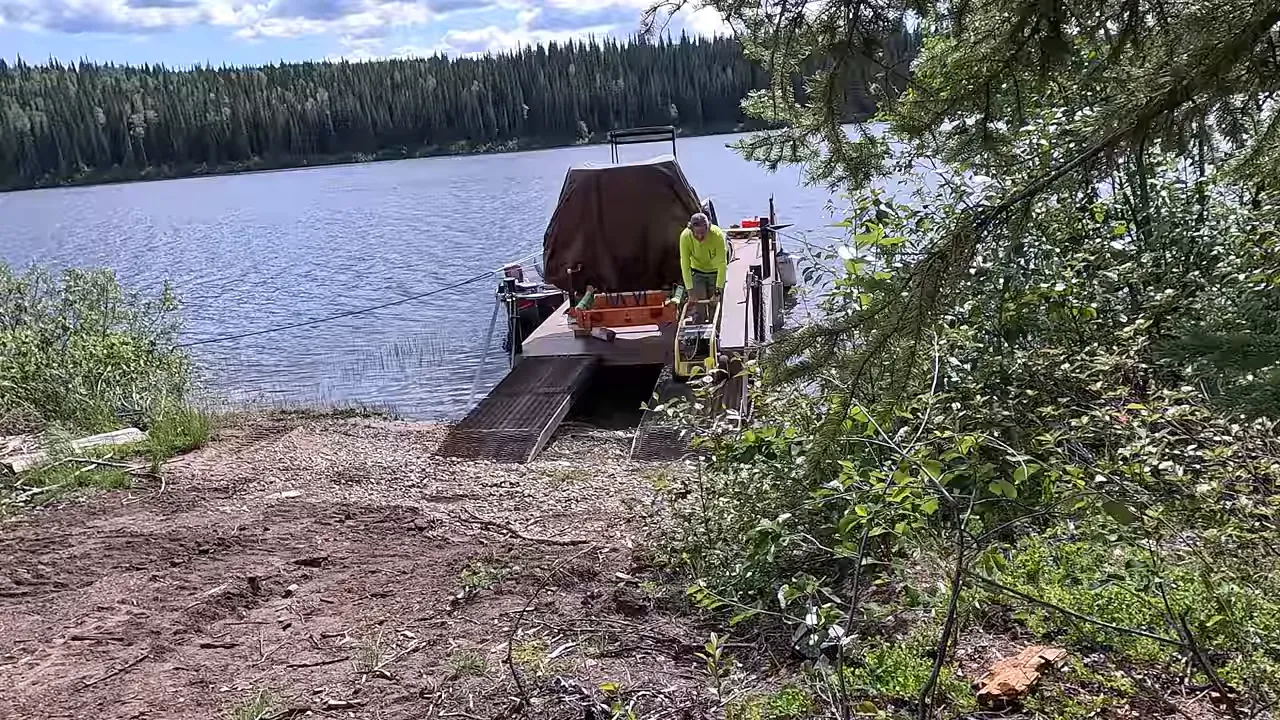
We started with one clear principle: move the mill without damaging it. Loading the sawmill straight from the trailer onto the barge avoided bending the deck or stressing the running gear, but it left the mill backwards on the barge. That decision shaped everything that followed. Getting a heavy, rear‑heavy sawmill off a small barge and onto a narrow, vegetated shore meant we had to think in terms of water depth, wind, and where the loader could safely sit.
Our plan was simple on paper: beach the barge on the most level cleared shore, lower the ramps, and use our Kubota track loader Pepper to pull the mill up and off. In practice, wind, weeds, and unexpected shallow pockets forced constant adjustments.
Every Sawmill Needs… Pool Noodles — Protecting gear and prepping
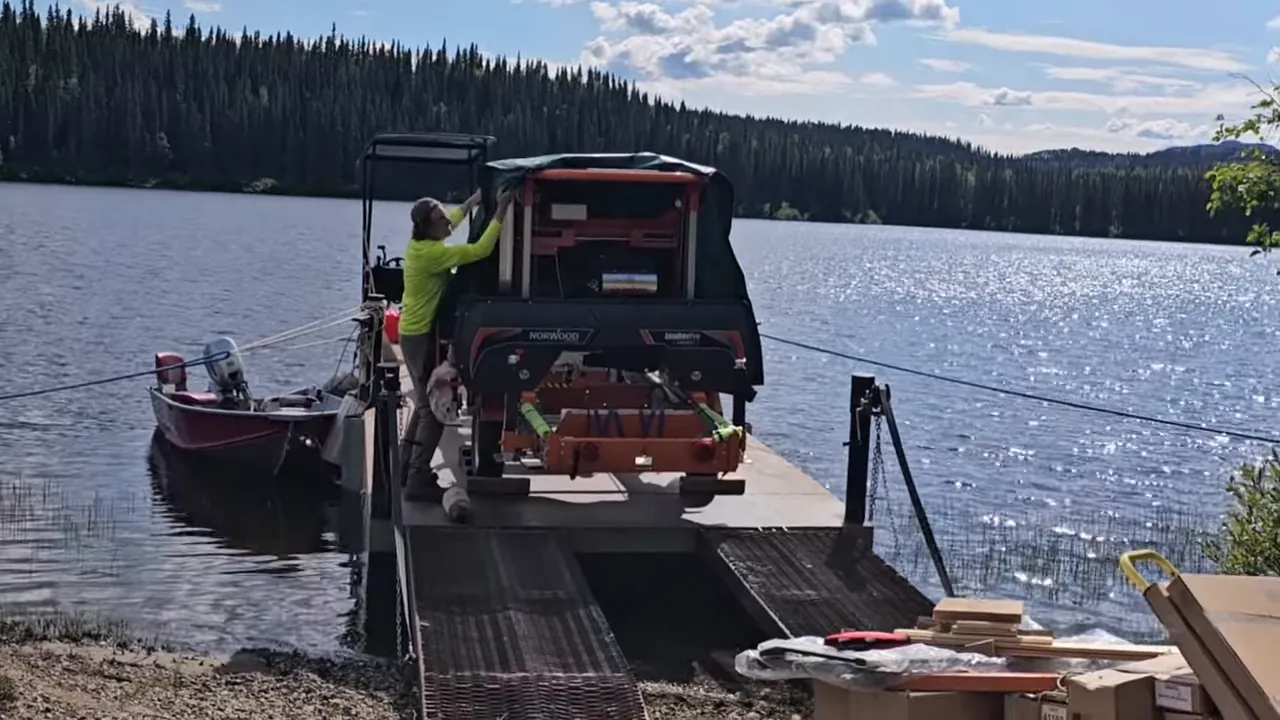
We wrapped vulnerable points on the mill with foam and fabric, because little things add up. The pool noodle trick kept tarps and paint from getting shredded during transit. We also inventoried spare blades, bolts, and a first aid kit — all small items that make a big difference when you’re offshore and self reliant.
Before any heavy move we checked the jack wheels, hitch, and running gear. Loose fasteners were waiting to fall out after the logging road ride, and we found bits tucked in the tracks. A quick inspection and a handful of bolts later, the sawmill felt more reliable for the push ahead.
Melodi Goes All In — Working with water and pumps
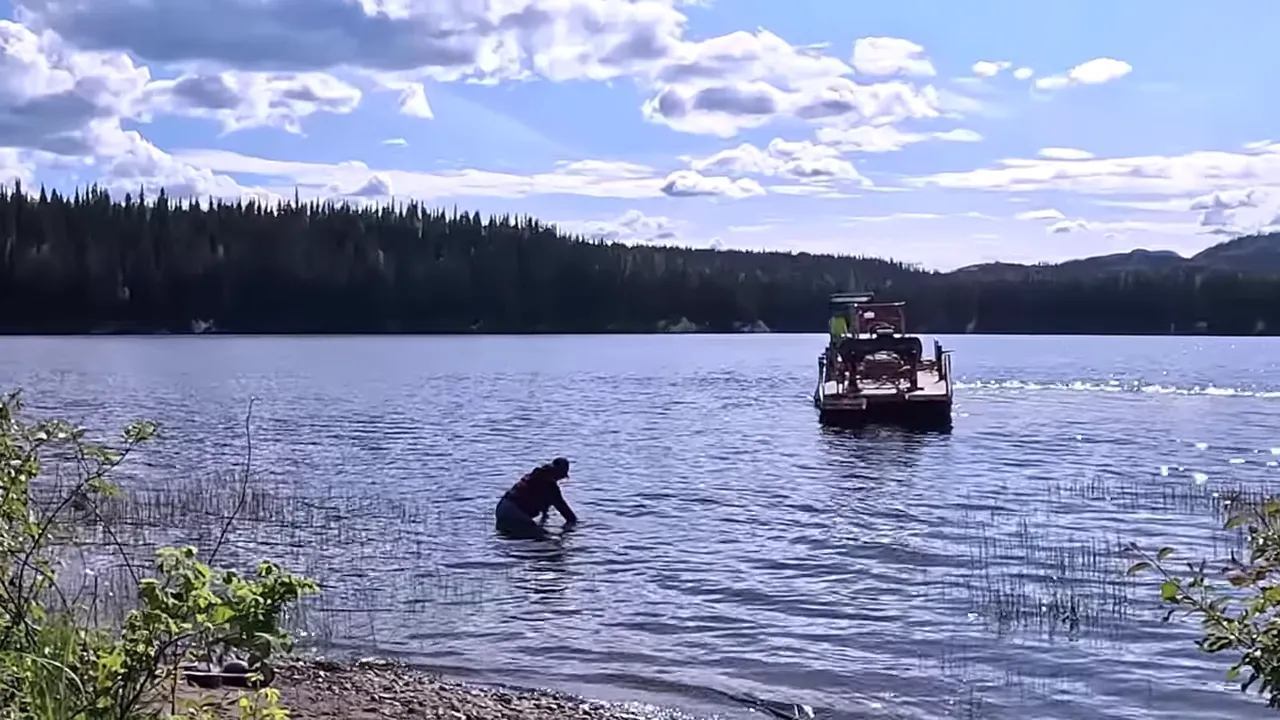
Water depth and our domestic water pump created one of the more delicate moments. The barge hull could easily crush the 150 feet of waterline supplying the cabin. Melodi waded in to move the pump while we maneuvered the barge; it was careful, manual work that prevented a major problem. Staying calm and moving one thing at a time let us protect the island’s water supply and keep the mill extraction options open.
We learned that small decisions—where that pump sits, how far the ramps extend, and where Pepper can safely drive—change the whole plan. That same attention to detail applies to off grid life: protect the essentials first.
Deploying the Boom Lift — When big lifts meet tricky angles
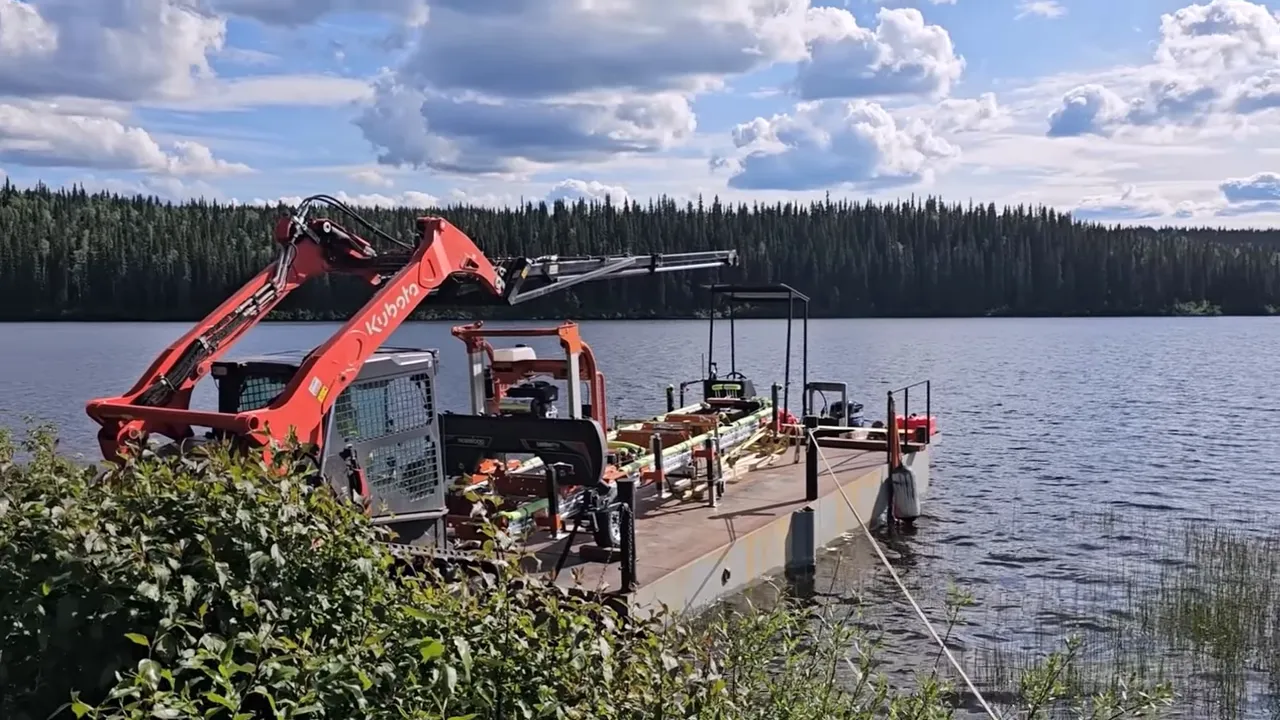
Our initial strategy relied on the boom lift to pick the whole mill off the barge. The idea sounded elegant: lift and carry. But the shoreline geometry and the mill’s weight distribution created low margins for error. The boom lift proved useful for precise positioning, but when we tried to do a controlled carry the system flexed, straps shifted, and the lift could not maintain the necessary rigidity.
We discovered that a fixed crane would have been a better tool for a full carry. Instead, we switched to a simpler, more controllable approach: forks and slow, deliberate pulls. The lesson was clear—choose the tool that gives control in the conditions you actually have.
We’re Done! — Knowing when to stop and reassess
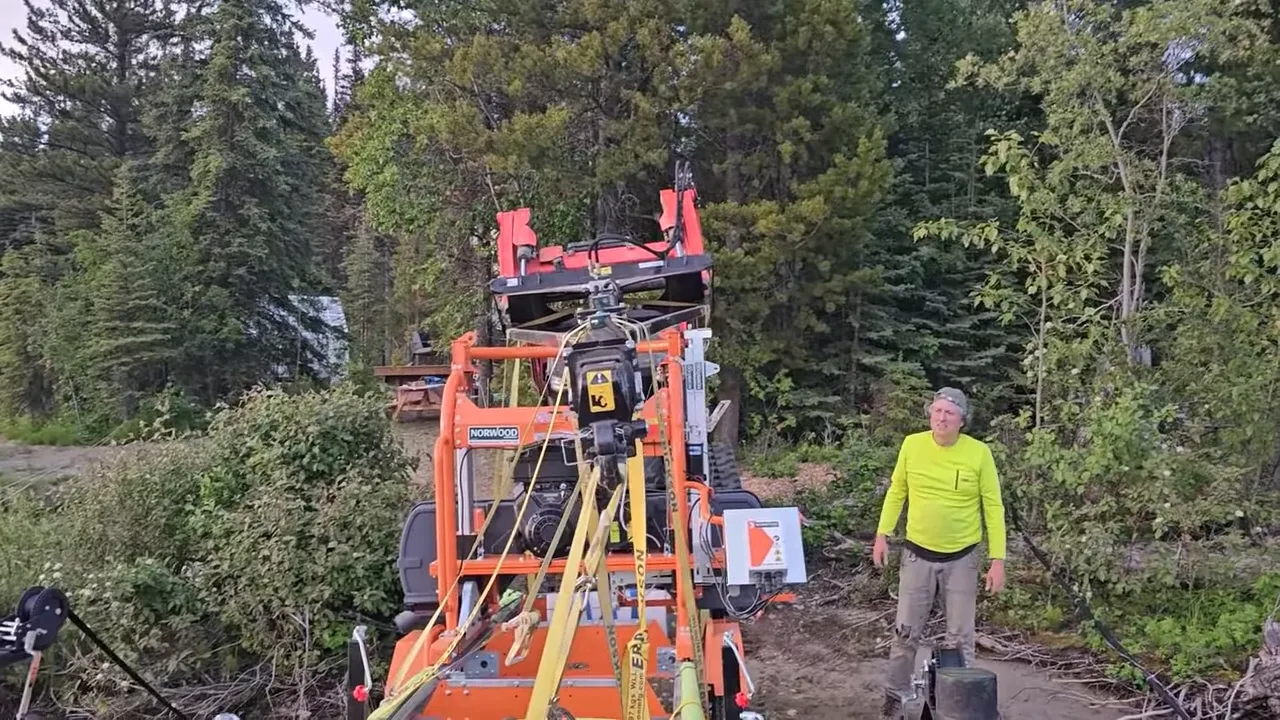
One evening it became obvious we were at the limit of safe movement. We tarped the mill, covered exposed parts, and walked away to sleep on the plan. That pause allowed us to rethink the approach without compounding errors. The next day we replaced the boom lift plan with the forks, and that decision made steady progress possible.
Stepping back and choosing safety over forcing a single move saved time and stress. With work like this, measured persistence beats frantic pushing every time.
Plan B and Plan C — Tool swaps, blocking, and finishing the pull
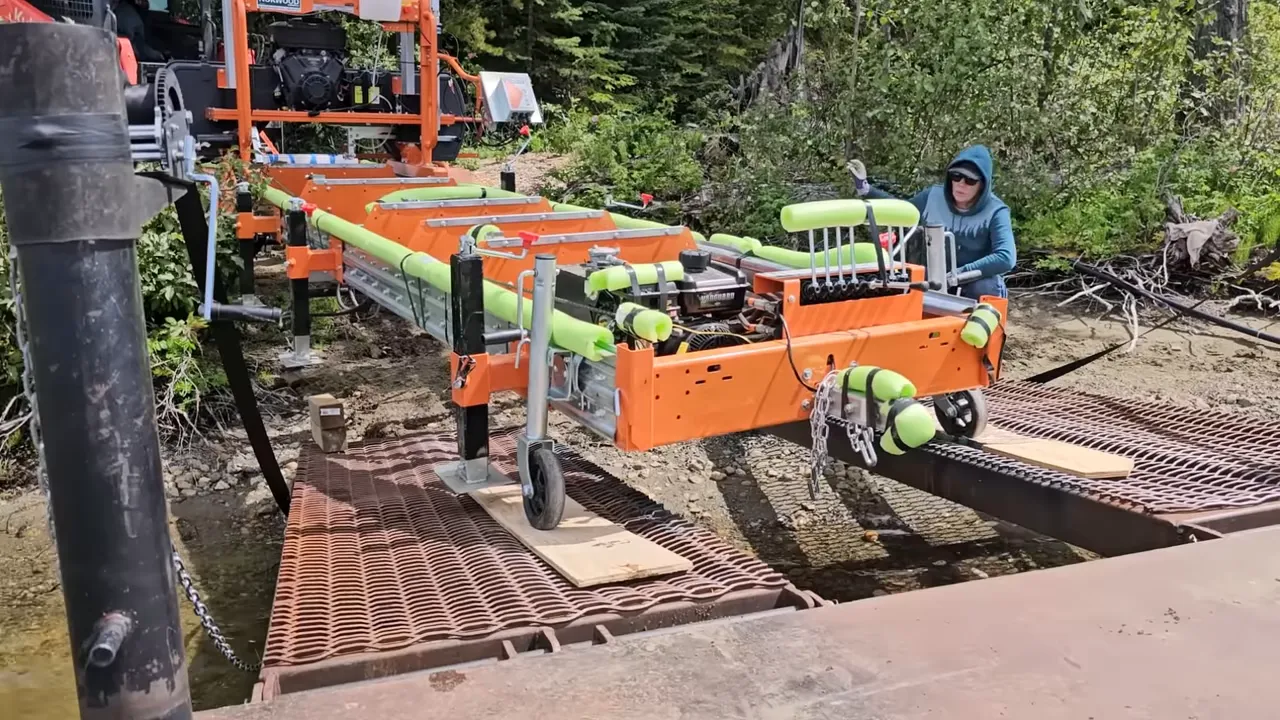
With forks on Pepper, we lengthened the wheelbase by repositioning jack wheels, used plywood and blocking to create a smooth rolling surface, and ratcheted the mill into position one inch at a time. We improvised braces, used the loader’s ball and forks, and constantly watched the jack legs and wheels. It took careful, repetitive adjustments—lift a little, slide a little, block the wheels, and repeat.
In the end, the mill rolled off the barge and onto Bird Island. It was the result of patience, tool swaps, and thoughtful blocking. Throughout we kept terms like OffGridIslandBuild, OffGridLife, and RemoteIslandHomestead front and center in how we planned and executed each step.
Key takeaways for off grid moves
- Plan for the worst accessible angle and choose transfer positions that minimize stress on equipment.
- Protect essentials — waterlines, tarps, and moving parts are more expensive to replace than the time it takes to secure them.
- Switch tools when the situation changes. A boom lift can be elegant but sometimes forks and blocking provide far better control.
- Work in small increments. Moving heavy gear inch by inch reduces risk and lets you react if something shifts.
Throughout this operation we kept returning to our primary aim: get the sawmill onto the island intact and ready to work. That meant balancing ambition with caution, and leaning on both equipment like our KubotaTrackLoader and careful manual steps.
Shopping and social links used in our planning and gear references include our favourite resources: Favorite Things, our Amazon Store, and the My Wild Holm Facebook page at https://www.facebook.com/mywildholm.
We hope this breakdown of how we moved the sawmill helps you plan your own heavy off grid equipment moves. When you combine preparation, the right tools, and slow, steady work, even big obstacles become manageable.
Keywords: OffGridIslandBuild, OffGridLife, RemoteIslandHomestead, OffGridSawmill, NorwoodSawmill, BargeTransport, KubotaTrackLoader, CanadianOffGridLiving, SelfReliance, CabinLife
Hashtags: #OffGridIslandBuild #OffGridLife #RemoteIslandHomestead #OffGridSawmill #NorwoodSawmill #BargeTransport #KubotaTrackLoader #CanadianOffGridLiving #SelfReliance #CabinLife