Barge Supply Run 101: How We Stock a Remote Island Homestead – My Wild Holm S3 Ep19
Join us on an unforgettable journey as we tackle a barge supply run to support our remote island homestead. In this action-packed episode, witness firsthand how we haul supplies, work with reclaimed wood from our old cabin, and overcome off-grid challenges with plenty of humor and heart!
Table of Contents
- Issues with reclaimed wood
- Opal’s day in the sun — life with our rescue dog
- Picking up supplies — loading, hauling, and tailgates
- The realities of barging and island logistics
- Final thoughts on remote island homesteading and supply logistics
Issues with reclaimed wood
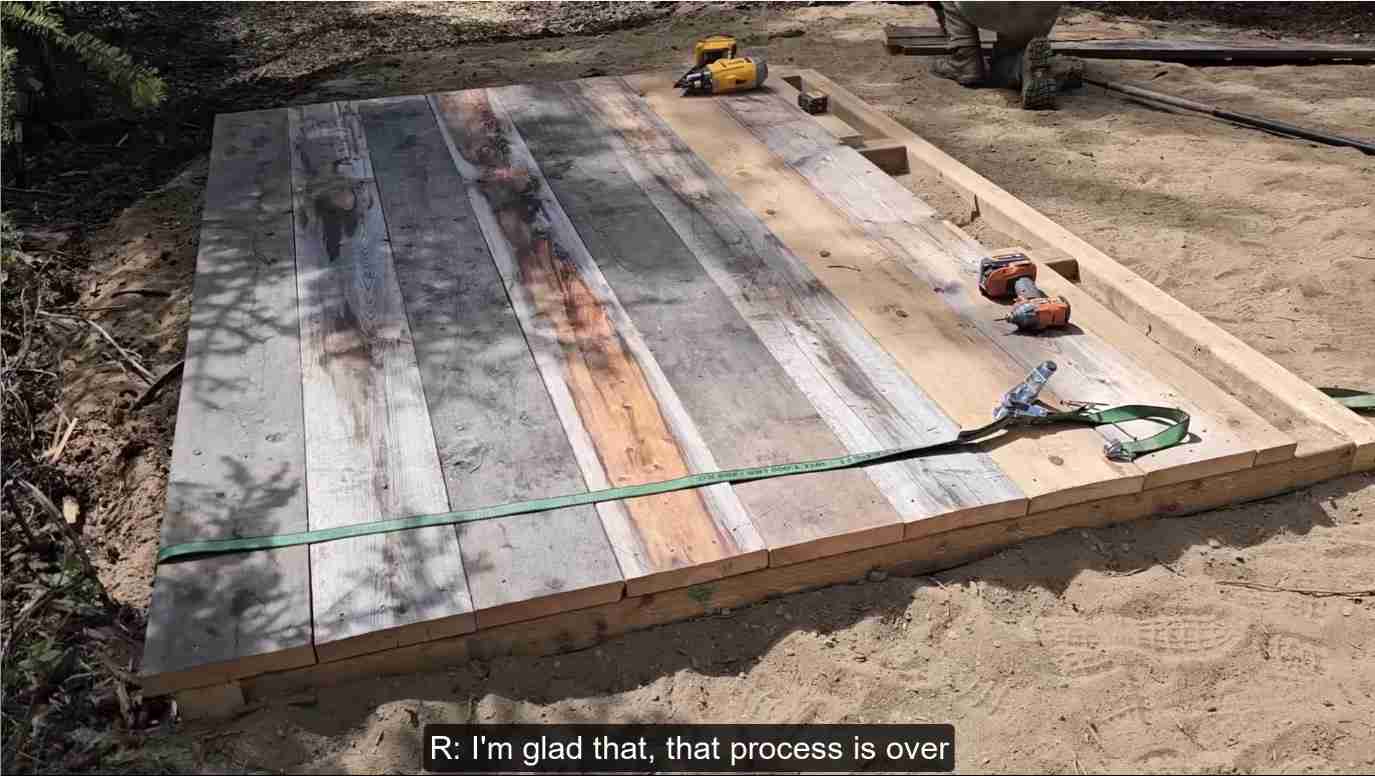
We’re using treated four-by-fours as the supporting structure and plan to nail reclaimed wood from the old cabin onto that frame. Those big planks are about 11 inches wide and roughly two inches thick — true old-growth lumber that you just don’t find anymore. Reclaiming material feels right for our Remote Island Homestead and helps keep our build authentic and sustainable.
That said, old planks come with their quirks. Even thick, strong boards can be warped or bent. We strap them, slowly pulling the bend out so the finished decking sits true. Some folks might ask, “Why bother?” — especially since parts of this work are hidden under the cabin and tucked away from view. For us, finishing the job properly is part of the build ethos: if we know it’s not straight, it will bother us later. We want the work to last and to be right. As we handle reclaimed wood we also watch for pieces that’ve lost integrity; occasionally one breaks and has to be replaced. That’s part of the reality when working with reclaimed material from an old structure.
Opal’s day in the sun — life with our rescue dog
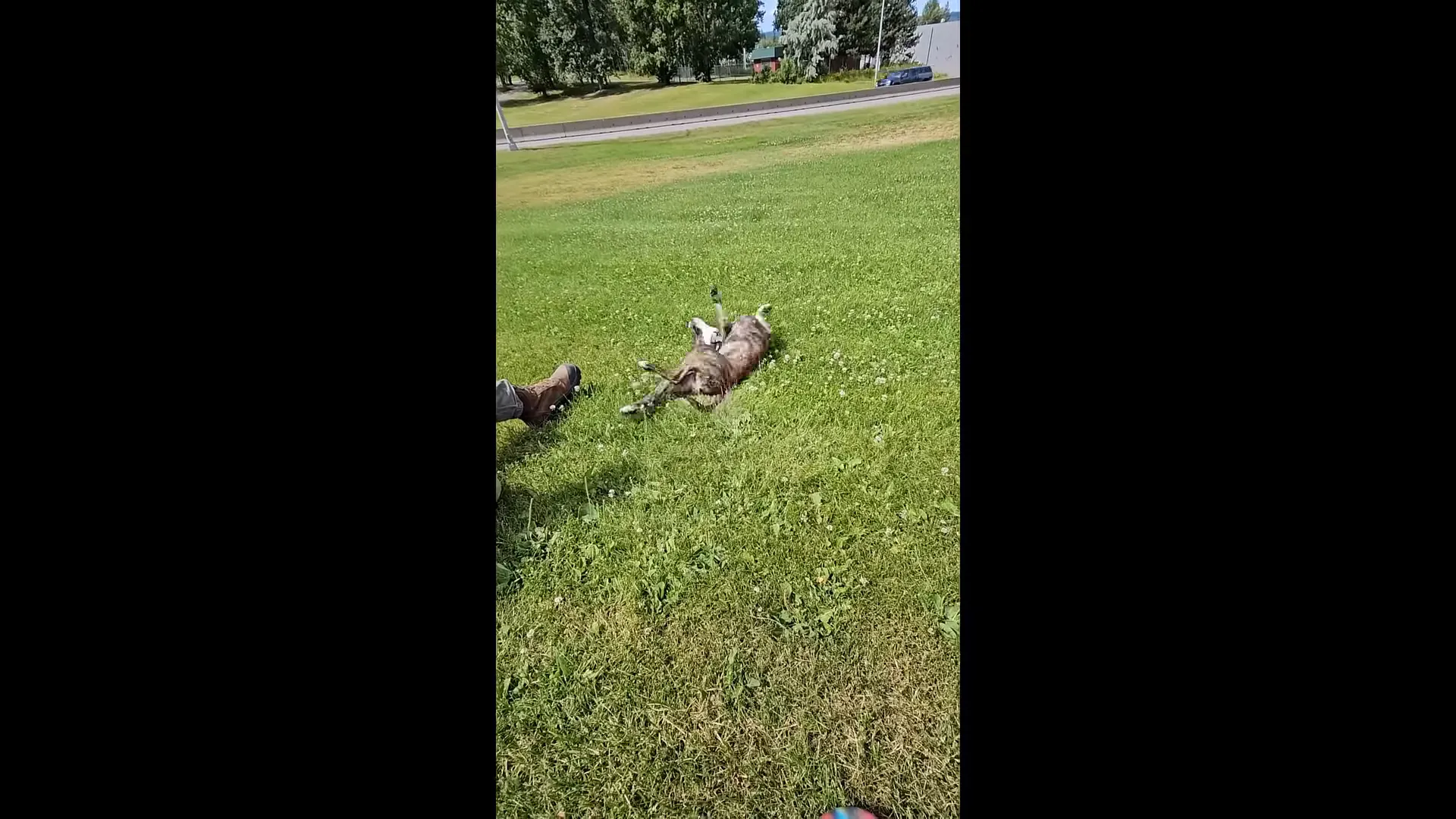
Our little Mexican rescue, Opal, has settled into island life and is a constant source of joy. Lazy afternoons in the sun — watching her roll and play — are the kind of moments we build this lifestyle for. Being off-grid means more time outdoors, which suits her perfectly.
These quiet interludes also remind us why we do what we do: days filled with simple pleasures, dogs who are content, and the privilege of living in the wild. Whether we’re pausing to play with Opal or taking a quiet walk around the island, those moments recharge us and keep us grounded.
Picking up supplies — loading, hauling, and tailgates
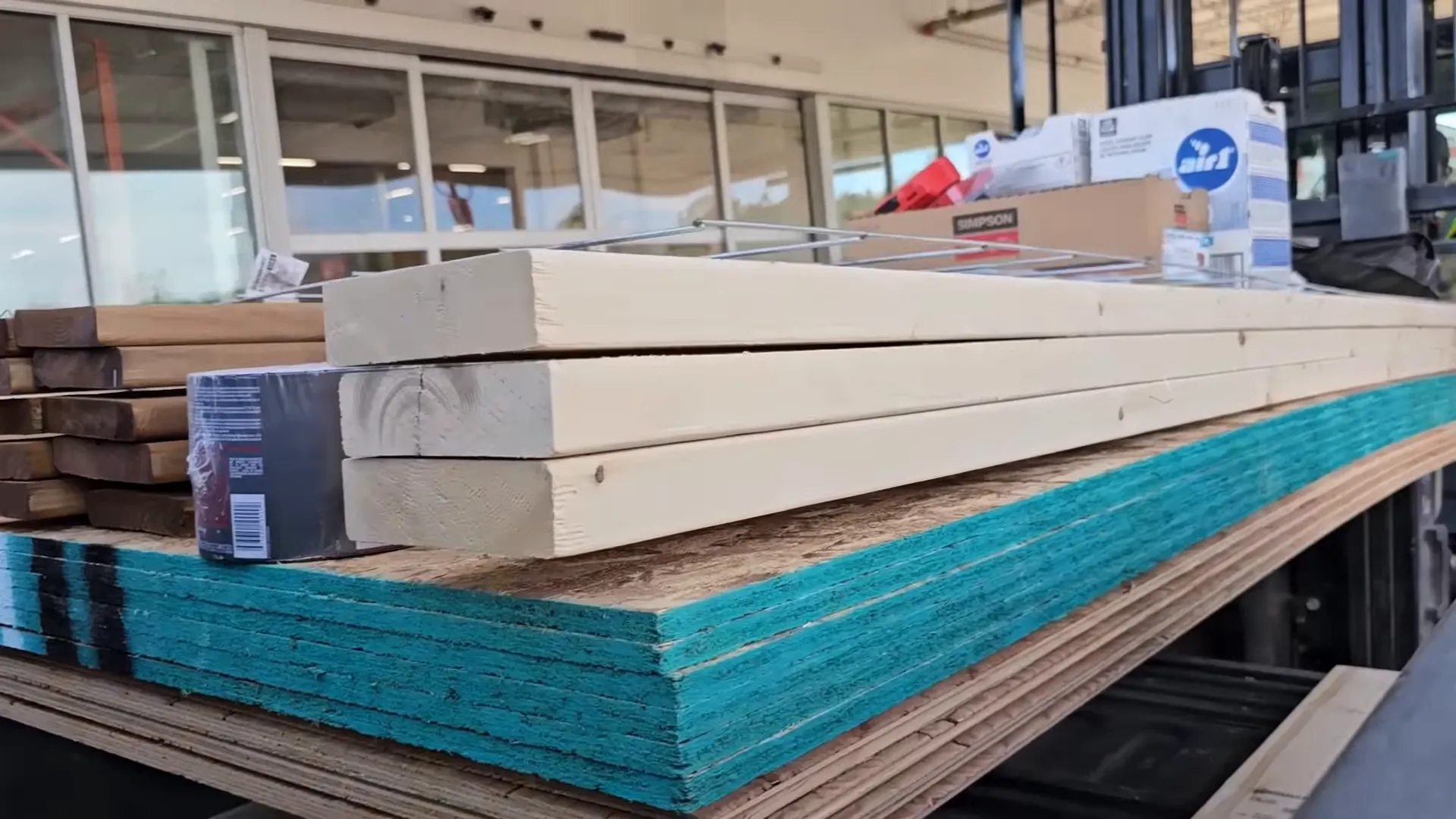
One of the practical parts of island homesteading is the supply run. We load lumber, fasteners, greenhouse bits, inverter-room components, and decking — everything needed to keep the project moving. For us, bringing the truck across on the barge makes unloading far easier: instead of hand-bombing materials down the bank, we drive the truck to the exact spot where items are needed. That convenience is a major time (and back) saver when constructing a DIY Island Life setup.
Loading isn’t always straightforward. Balancing the load, managing dunnage, and coordinating the barge loading at the deep-water port takes patience. We’ve mastered a few moving parts: communication with the loader operator, careful placement on the trailer, and multiple tailgate moves when necessary.
The realities of barging and island logistics
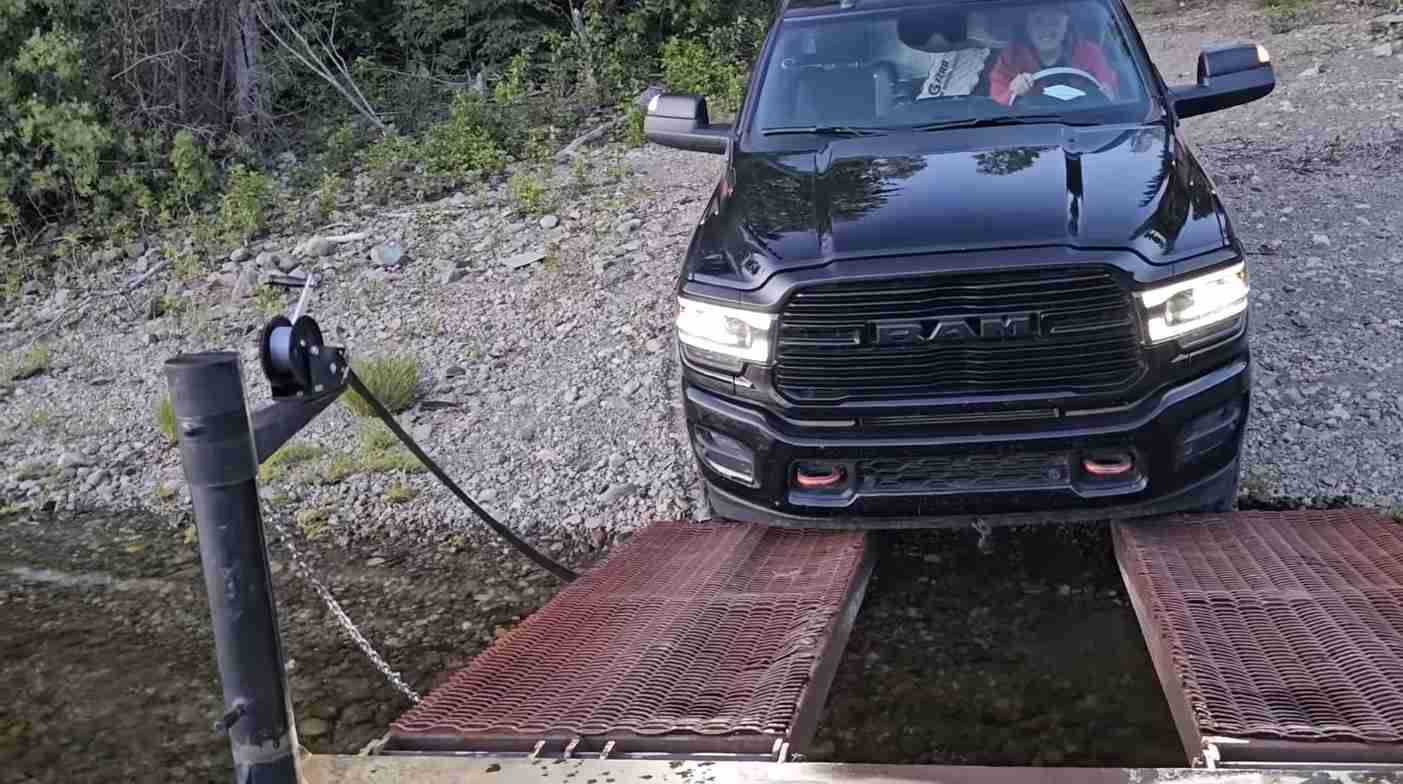
Crossing the water and negotiating ramps is its own art form. With the barge, ramp angle and front-end clearance are constant considerations. We’ve learned that longer ramps sound great in theory, but hanging too much weight off the front of the barge changes handling and isn’t practical. Instead, we use small tricks: bringing the barge in closer, engaging motors at idle to nudge the vessel forward into the beach, and sliding boards across the bevel to lift the truck’s front wheels by an inch or two—just enough to clear the air dam.
Why do we bother with all this? For two main reasons: secure parking for the truck and the efficiency of being able to drive materials to where they’re needed. The road to the deep-water port is dusty, full of potholes, and can shake supplies loose — we’ve learned to strap everything down tight. The route has produced unforgettable wildlife sightings and instances where the road conditions test our resolve, but the payoff is huge. Making the trip — loading the barge, steering through shallow leads in early spring ice, and pulling up to our island — is part of operating a Sustainable Homestead in the wild. Each successful crossing means another step forward on the homestead build.
Final thoughts on remote island homesteading and supply logistics
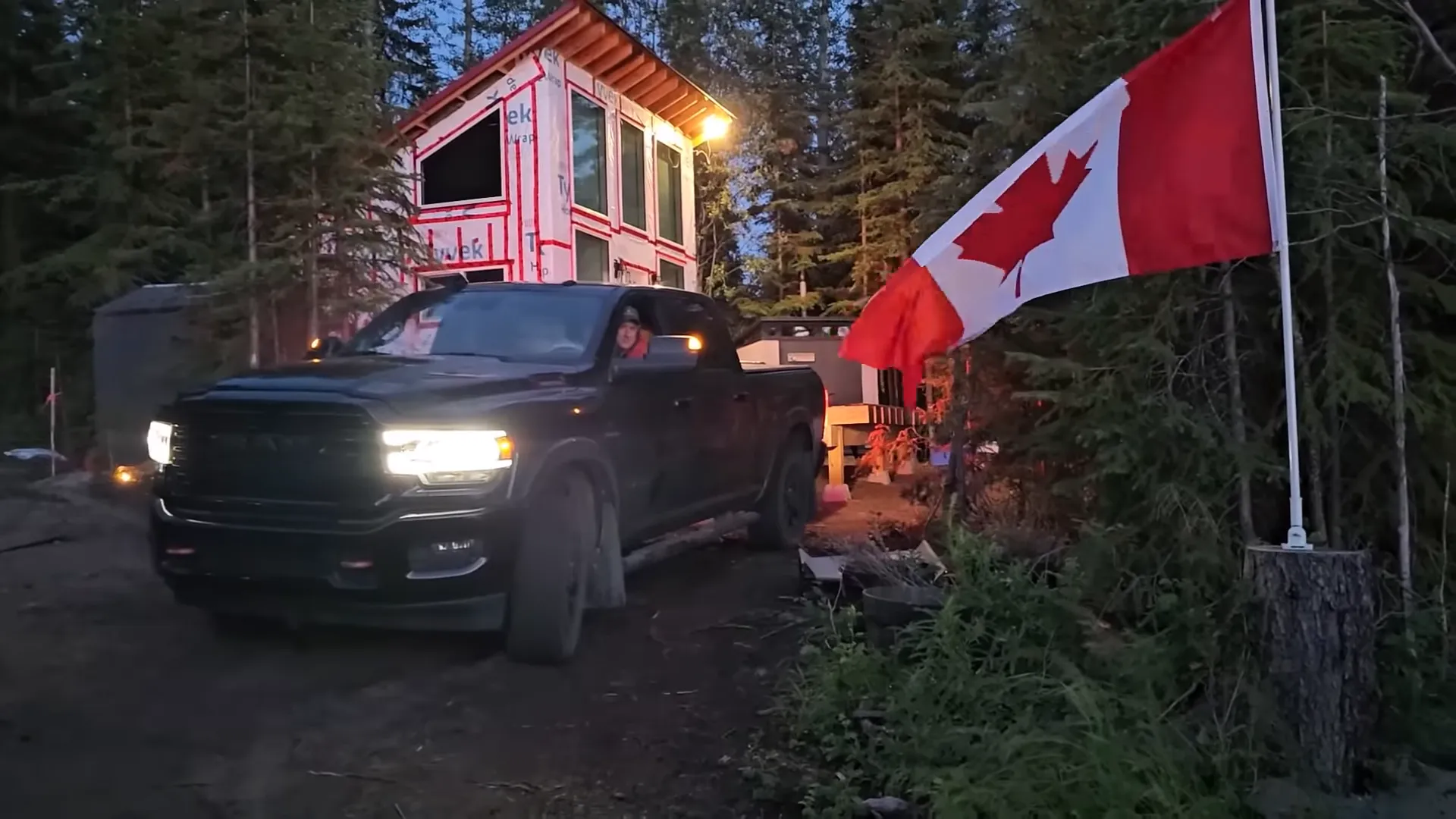
Living on a remote island means accepting a bit more effort for everyday tasks. Yet the payoff is real: purposeful work, reclaimed materials, and the peace of being immersed in nature. Whether it’s perfecting the use of reclaimed planks, watching Opal enjoy a sunlit slope, or refining our barge-loading technique, every small improvement matters. We’re learning, adapting, and enjoying the process of building our homestead.
If you’re planning your own off-grid or tiny cabin project, keep these takeaways in mind: plan logistics as carefully as you plan the build, respect reclaimed materials for what they are, and build solutions that make repetitive tasks easier over time. Above all, savor the moments — because those are what make this life worth it.
Helpful links and tools we use
- Shopping and gear: Our Favorite Things
- Amazon store with materials we like: My Wild Holm Amazon Store
- Follow us on Facebook: My Wild Holm on Facebook
#RemoteIslandHomestead #OffGridLiving #BargeSupplyRun #DIYIslandLife #HomesteadSupplyHaul #WildernessAdventure #SustainableHomestead #OffGridConstruction #OffGridHomestead