Remote Island Living: Off Grid Cabin Life Outdoors – UNUSUAL Homesteaders – My Wild Holm S3 Ep 20
Welcome back to our remote island homestead! In this episode, we’re completing the deck boards, and setting up a foolproof, gravity-fed irrigation system for the greenhouse. To beat the summer heat, we even MacGyver an air conditioner into our cabin window—all while listening to the haunting call of the loons and watching schools of fish gather at our shoreline.
Table of Contents
- Rigging Water for the Greenhouse — GreenhouseIrrigation
- Opal Does Her Own Gardening on the Sly! — HomesteadingLife
- Ryan Wears an Air Conditioner as a Hat — TinyCabinHack
- Walking Down to Our Hockey Rink – RIP — CanadianWilderness
- Ryan’s Least Fun Job – EVER! — CabinDeckBuild & JoistTape
- Small Fixes, Big Satisfaction
Rigging Water for the Greenhouse — gravity-fed greenhouse irrigation
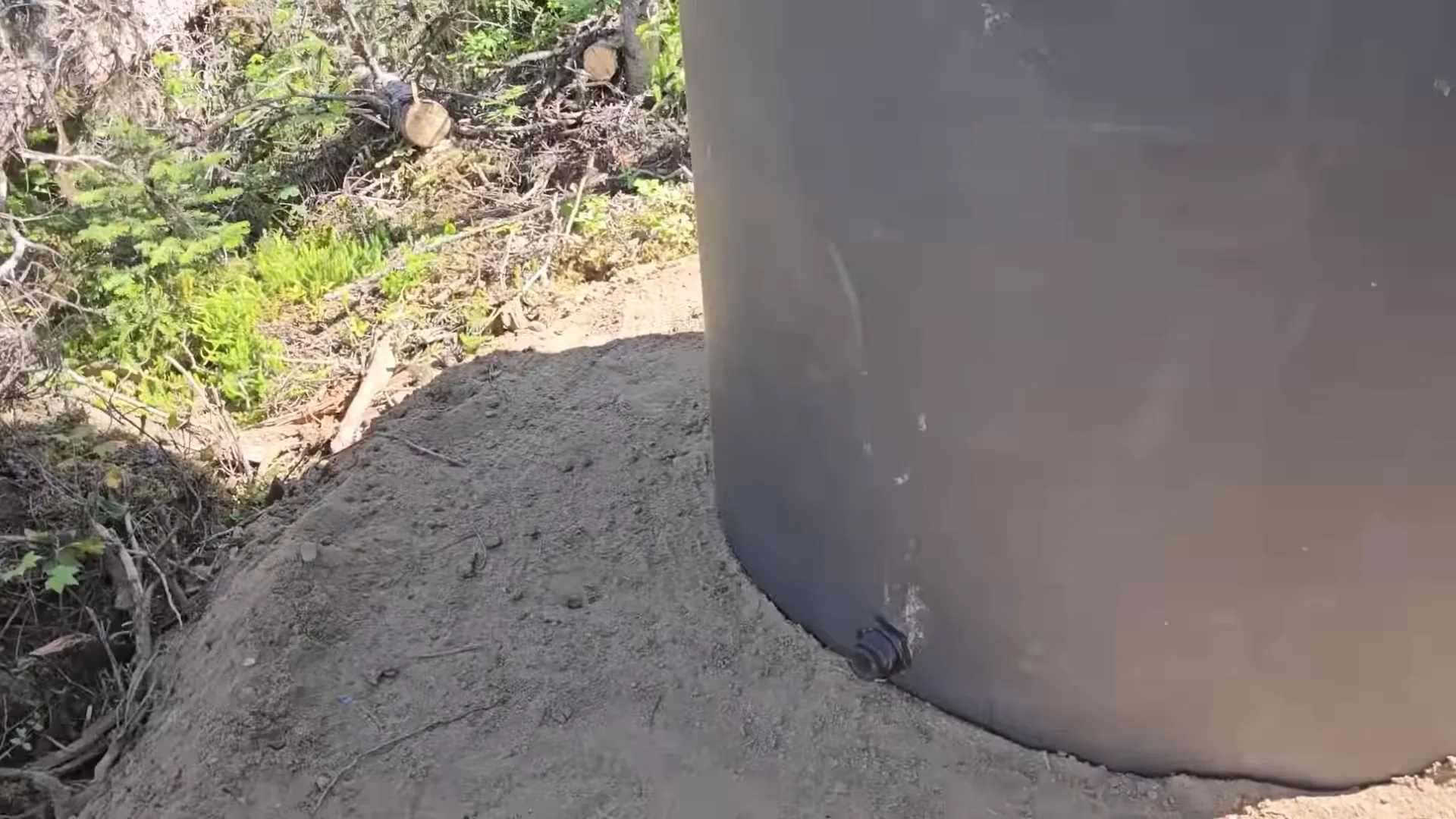
We decided to keep the greenhouse irrigation simple and resilient: a gravity-fed system that will still work if the power is out. Starting at a 1-inch ID female bung on our water tank, we carefully threaded in a 1-inch nipple with a few wraps of Teflon tape (wrapped clockwise). Because the fittings are plastic, everything is hand-tightened to avoid wrecking the threads.
Downstream we added a one-inch PVC shutoff valve (again, Teflon in the direction of the winding) and an NPT-to-garden-hose adapter so we could test the idea quickly with a standard hose. The plan is to eventually swap the hose for a true 1-inch PVC line, but testing with the hose gave us a proof of concept fast.
To automate watering, we installed a small battery-operated solenoid/timer and set it to run once daily at 5 a.m. for 15 minutes. That keeps the system simple and failsafe: no pump dependency, no complex electrics—just gravity doing the heavy lifting. We did note that a one-inch gravity feed limits flow if too many emitters are added; we have a plan to manage that by staging zones and, if needed, upgrading to a larger supply line.
Keywords we leaned into while designing: GreenhouseIrrigation, OffGridLiving, and RemoteIslandHomestead.
Opal Does Her Own Gardening on the Sly! — raised beds, pets, and plant protection
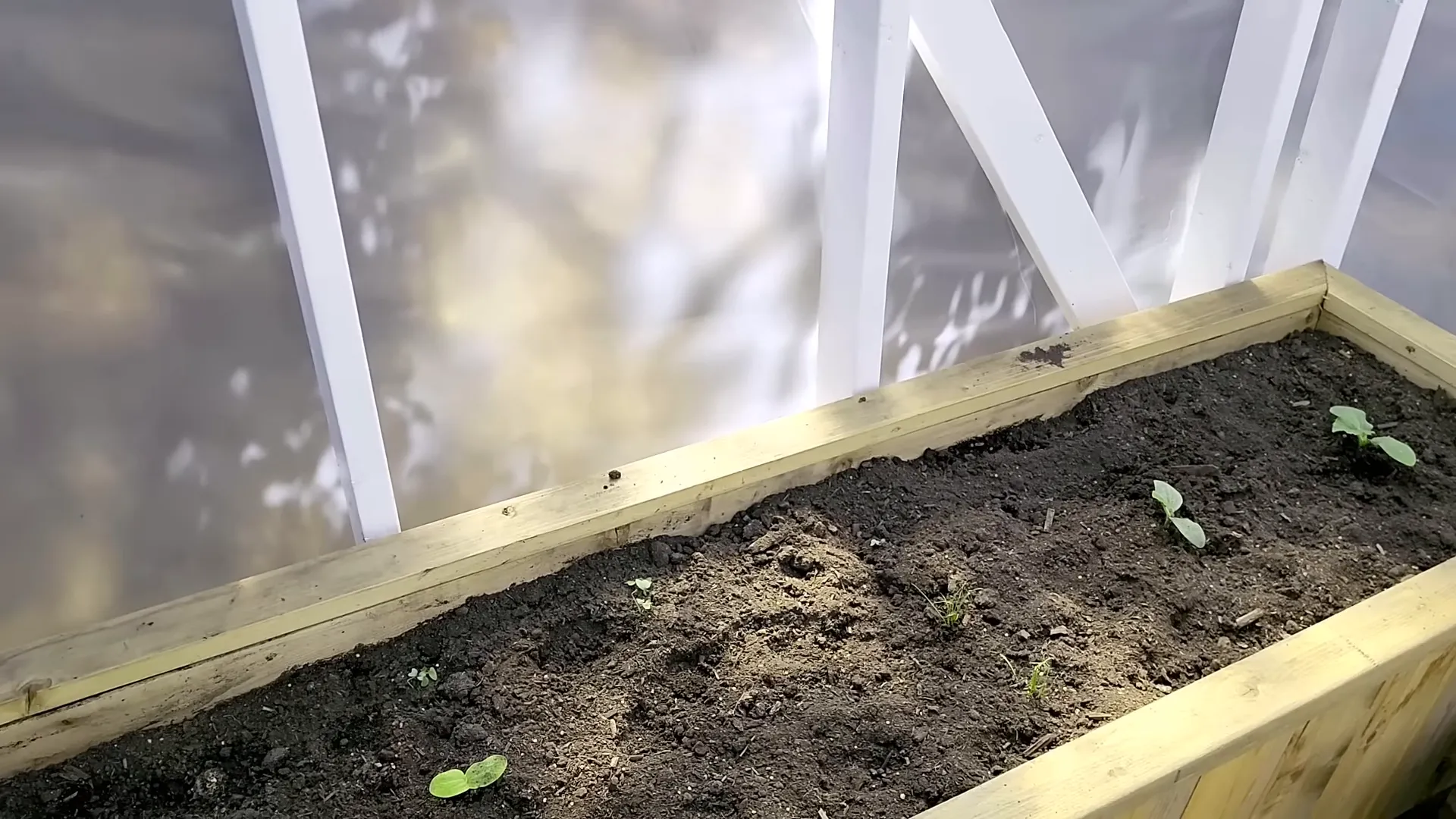
Our raised bed had been mysteriously disturbed. It turns out Opal, ever resourceful, had ripped an access point under a table and was sneaking in to dig up our seedlings. Cute, yes—helpful, not so much. We blocked the access and reinforced the plastic barrier, learning a small but important lesson: fencing and physical barriers are often the best first line of defense for young plants on a homestead.
We use simple distribution lines in the greenhouse and small emitter tubing for each bed. When balancing the system, remember that emitter spacing and the total number of emitters will determine whether a gravity-fed irrigation approach is sufficient or whether a pump is required. For small setups like ours, less complexity wins.
Ryan Wears an Air Conditioner as a Hat — MacGyvered tiny cabin cooling
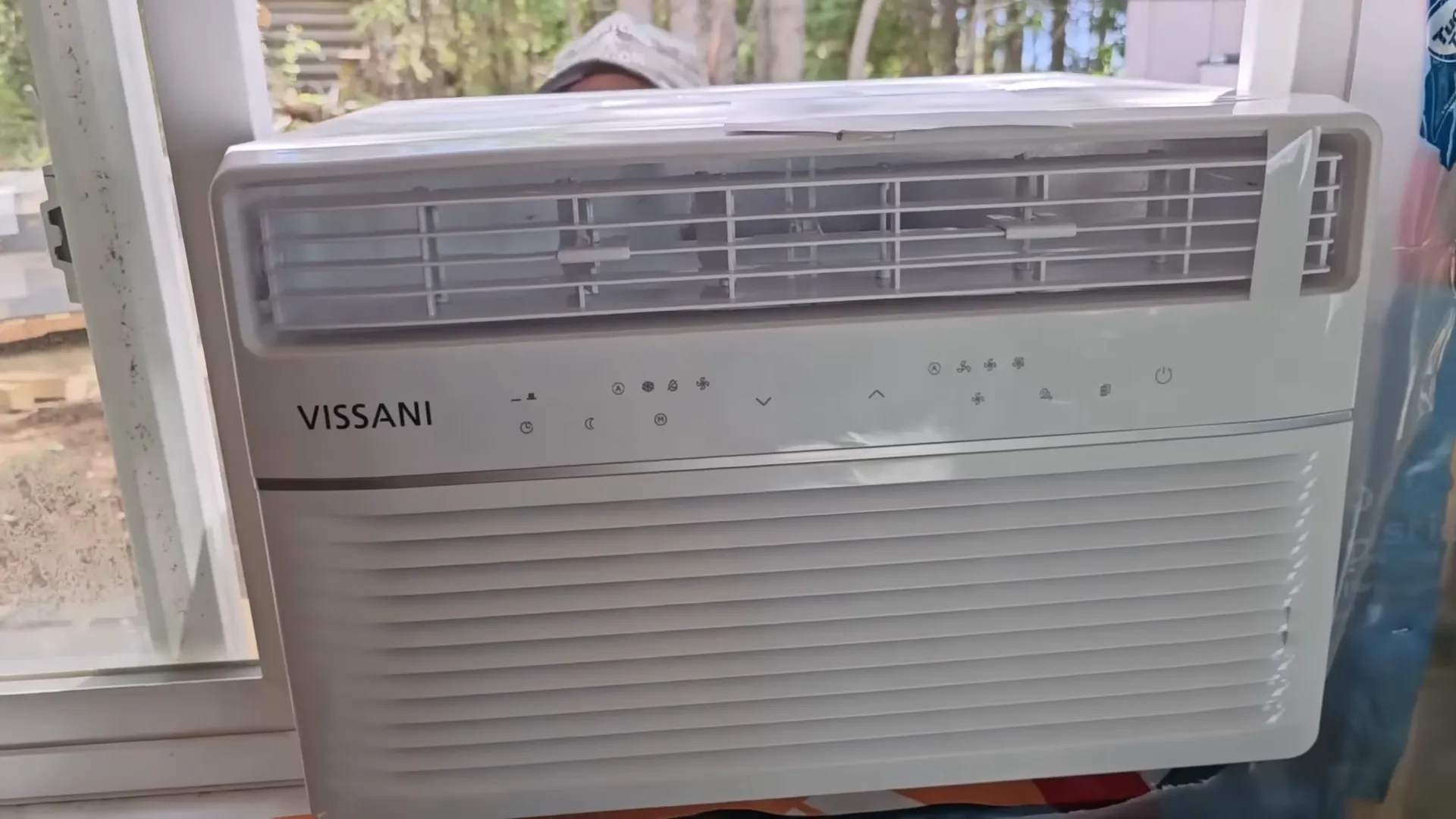
When the heat peaked and Melodi needed a cooler editing space, we improvised. The air conditioner we had was meant for a vertical sash window, but our cabin has a horizontal slider. With a bit of bracing, pressure-treated wood, and creativity we fitted the AC into the track, made sure there was a one-inch downward tilt for condensate to drain, and sealed gaps with split pool noodles and a piece of vapor barrier.
We’ll replace this with a mini split later—this is a temporary, low-impact option. The caveat is that running an AC increases electrical load, which in our off-grid setup means juggling inverters and pausing other power-hungry tools. That’s where the reality of SolarPowerStruggles and planning come in.
Practical takeaways: always allow a slight tilt for condensate, use foam gasket material for temporary seals, and plan power demands before running sustained loads on a small solar array.
Walking Down to Our Hockey Rink – RIP — shoreline life, loons, and fish schools
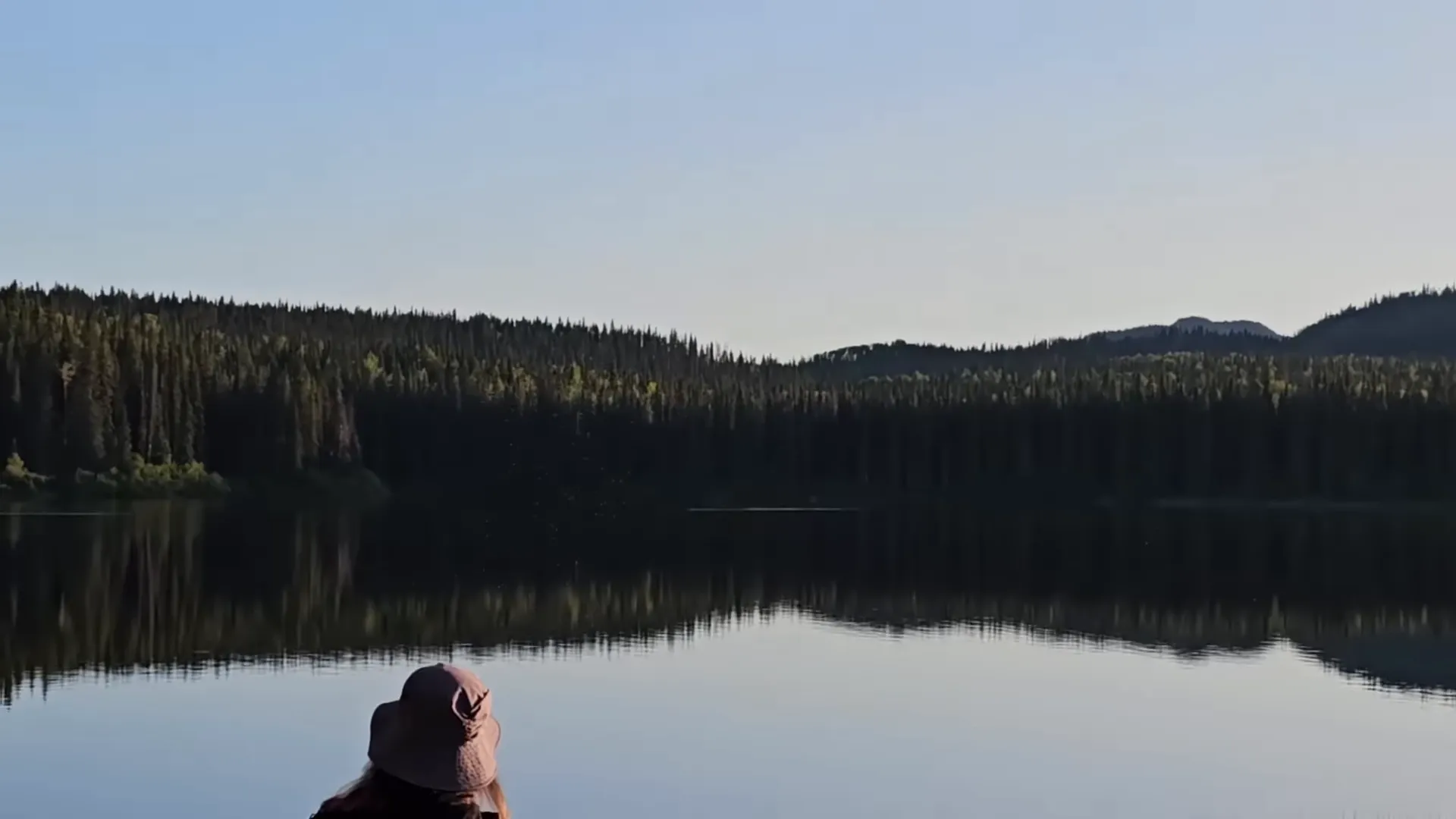
One of our favorite parts of life here is the wildlife soundtrack: loons calling as the sun sets and schools of tiny fish gathering in warming shallow pockets. We watched a temporary land bridge form as the lake level shifted and joked about making a rink there in winter (we won’t—too disruptive to the shoreline). We also discussed whether those trapped fish would find their way out; instincts usually prevail, but it’s a reminder of how quickly water features change on an island.
These quiet moments—listening to the loons and watching the water—keep us rooted. They’re part of what makes Remote Island Living special: the balance of DIY work with reverence for the land and its creatures.
Ryan’s Least Fun Job – EVER! — deck finish, joist tape, and finishing details
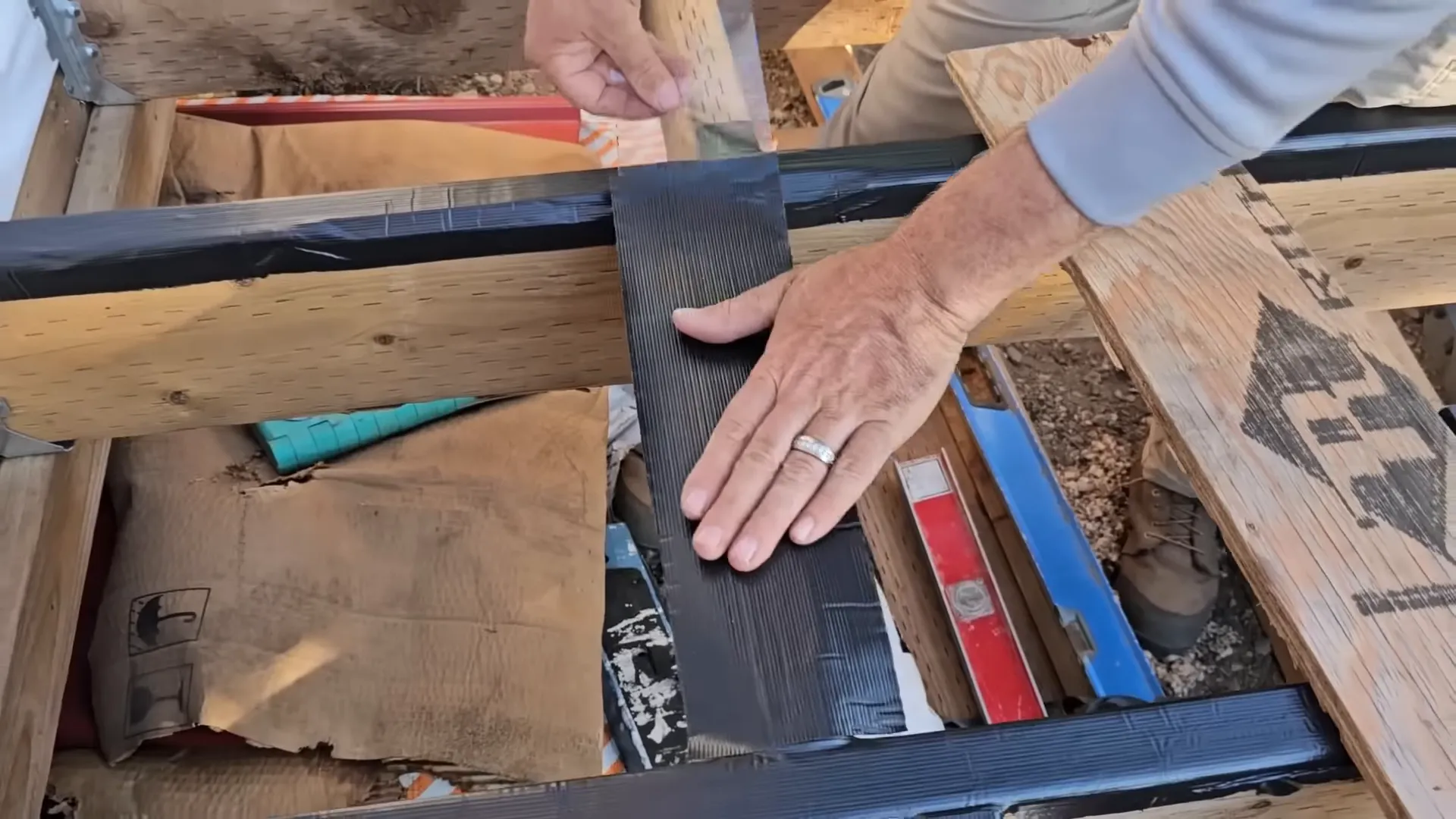
Finishing the deck was a satisfying but fiddly task. We used a bricked plank layout—12s, 10s, 8s with some 4s cut from 8s—to avoid a single seam that would weaken the structure (and to meet code considerations). Before laying decking, we applied joist tape across the ledger and blocking to protect the wood from moisture and prevent premature rot.
Joist tape is effective but picky: keep it clean and press it firmly to the wood (a small steel roller would have helped). The protective release film must be removed before sticking, and if it contacts itself it becomes difficult to manage. We learned to install in continuous runs when possible to avoid cutting so many small pieces. Despite our best efforts, some boards ended up warped or slightly different widths; in the end we reminded ourselves not to sweat the small stuff. The deck will age into a beautiful, functional surface for our cabin.
Tools and materials mentioned: pressure-treated lumber, Thompson’s clear stain for longevity, joist tape, joist hangers, and steel aircraft cable for minimal-visual rails—great for preserving views. Keywords: CabinDeckBuild, JoistTape, DIYCabinBuild.
Conclusion — small fixes, big satisfaction
At the end of the day we learned how small, deliberate choices make off-grid life easier: a gravity-fed GreenhouseIrrigation setup that doesn’t rely on power, a temporary but clever TinyCabinHack to beat the heat, and a deck built to last with proper moisture protection. We celebrated wildlife moments, fixed a few problems, and accepted that not everything needs to be perfect to be wonderful.
If you’re inspired to tackle an off-grid project, start with a clear plan, use simple, reliable systems where possible (gravity-fed water is a great example), and prioritize protecting wood from moisture. And always be ready to improvise with what you have—sometimes the best solutions are the ones you MacGyver together on site.
Shopping & Social Links
We use a few key items and resources that make life easier on the island: Check out our favorite tools and supplies, and our Amazon shop is handy for ordering specific parts. To stay updated, follow us on Facebookand Instagram.
#RemoteIslandHomestead #OffGridLiving #DIYCabinBuild #GreenhouseIrrigation #TinyCabinHack #HomesteadingLife #CabinDeckBuild #JoistTape #CanadianWilderness #SolarPowerStruggles