Off Grid Life Canada: Building a Tiny Cabin on Our Remote Island – Biggest Transformation Yet!
Waking up to a glassy lake and the hush of the forest is a quiet reminder of why we chose this off-grid life. Our remote island tiny cabin is beginning to feel less like a shell and more like a home as we work through the practical details that make all the difference: siding, trim, flashing, paint, garden work, orchard care, mosquito control, and safe height work.
Out here, every small step matters. The cabin has to protect us from the weather, the garden has to help feed us, and every decision has to fit the realities of building on a remote island in Canada with the tools, time, and energy we have.
Table of Contents
- Setting the Scene: a Tiny Cabin Becoming a Home
- Siding and Trim: Getting the Front Wall Right
- Routing, Rabbeting, and the Art of a Straight Cut
- Garden Work: Greenhouse, Orchard, and Mosquito Strategies
- Working Without a Shop: Makeshift Solutions and the Value of a Quonset
- Height Work and Safety: Respecting the Risks
- Paint and Transformation: What a Coat Can Do
- Balancing Building and Living: Choices We Make
- What We Learned and What’s Next
Working off grid means every decision balances practicality, available tools, and the unpredictable wild around us. The siding work on the front of the cabin is the latest visible milestone. When the house wrap and tacky tape come down and clean lines appear, the whole island feels different. We can see shadows of the trees playing on the boards and for the first time the structure looks like the home we imagined.
Siding and Trim: Getting the Front Wall Right
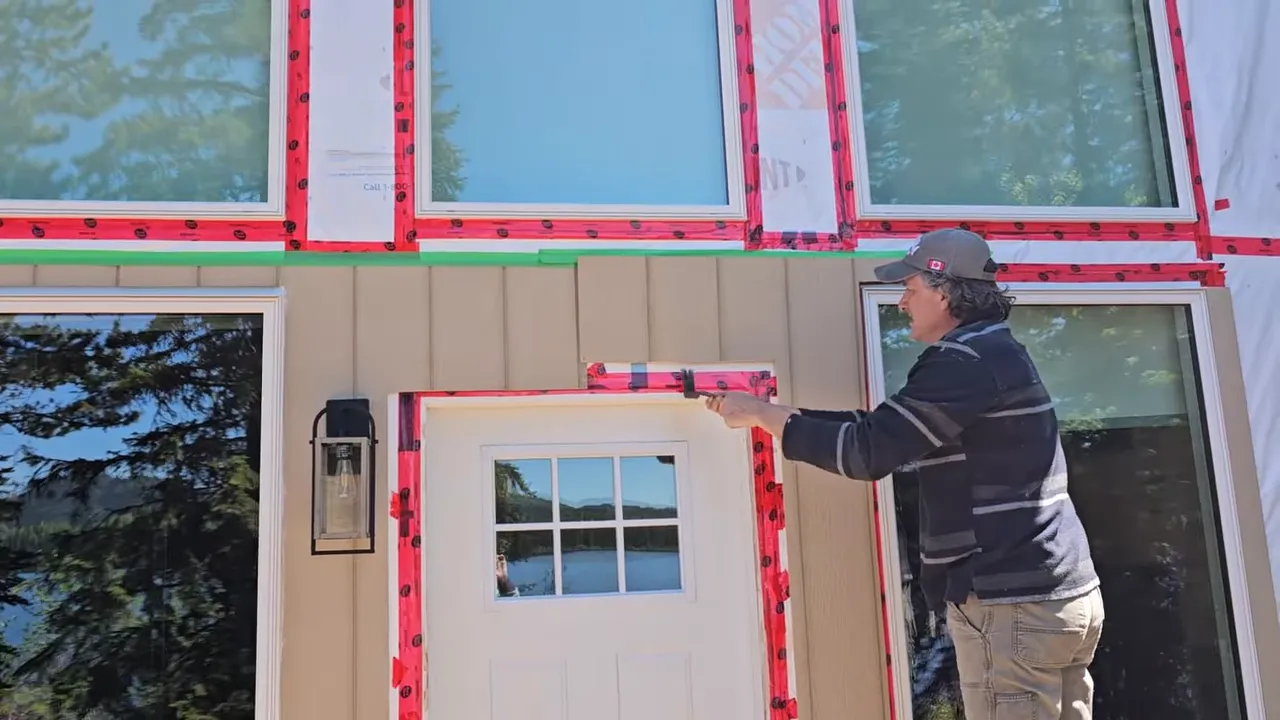
Installing siding on a small cabin is deceptively fiddly. There are window reveals, door jambs, and seams to hide. For us, the plan was straightforward: lay out the lower half, then measure and cut for the upper half, fit the trim, and paint. But the details made it a full day’s work.
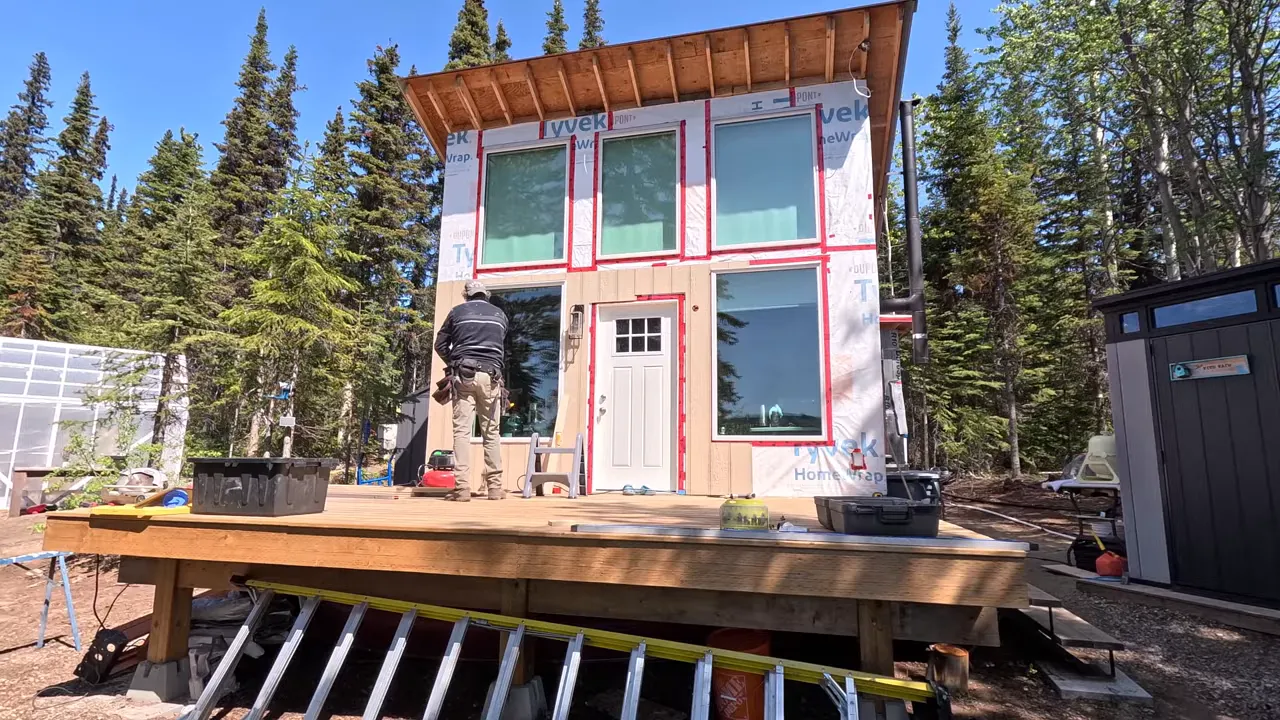
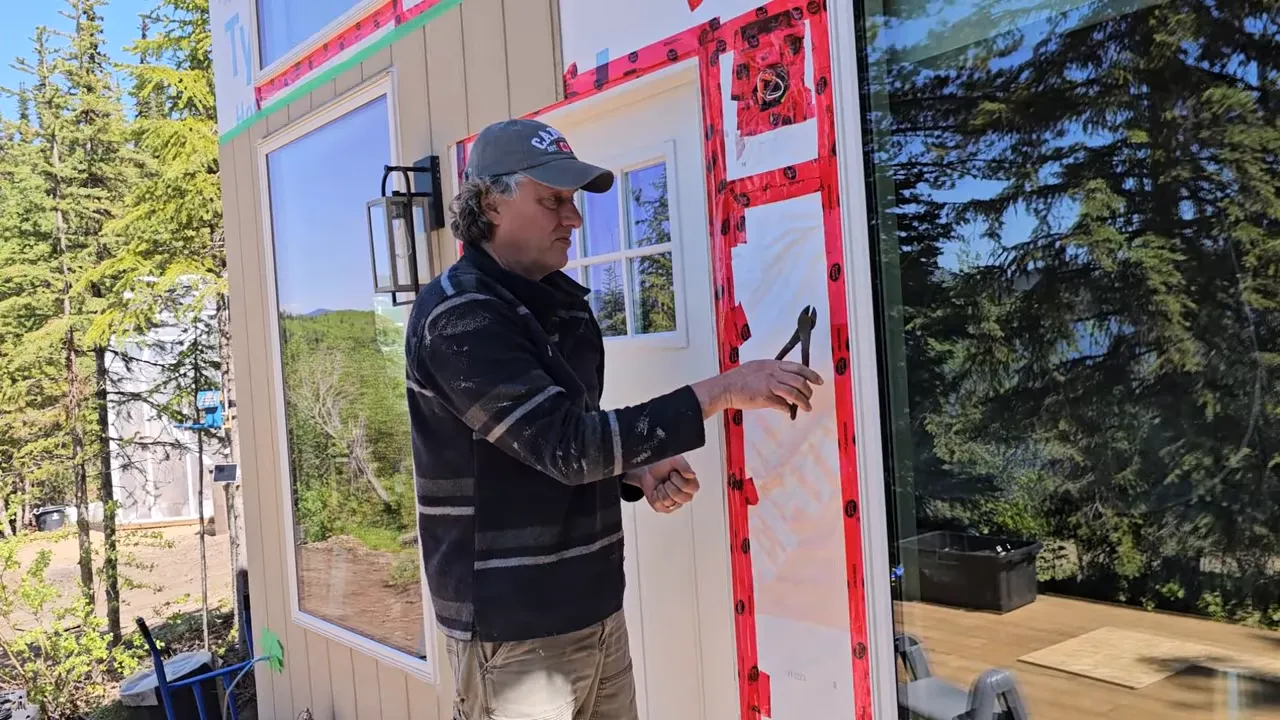
Because the door jambs sit on the same plane as the sheathing, we couldn’t simply run siding up to them. The trim had to rest on the jamb, so we rabbited the trim to tuck the siding under its leading edge. That little adjustment makes the finish look intentional and tidy. We also spent time removing any nails that had pulled through the sheathing; imperfect nail heads force extra work when routing and finishing.
Routing, Rabbeting, and the Art of a Straight Cut
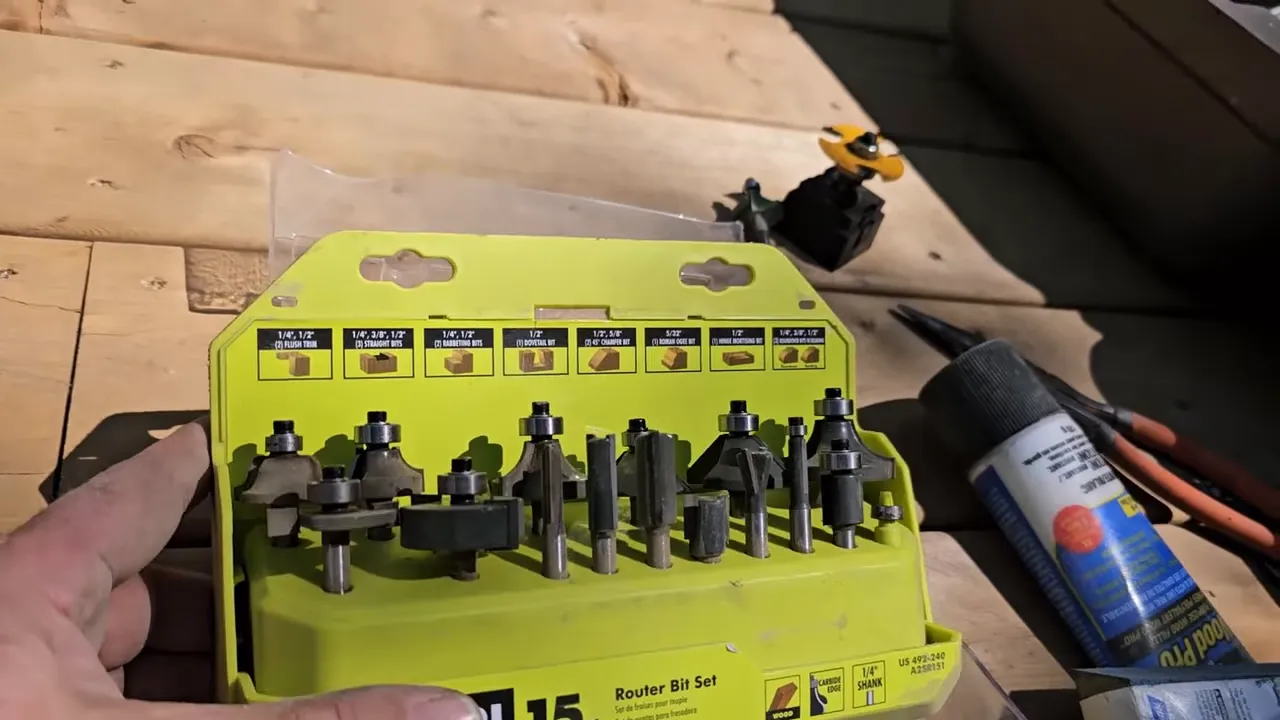
Finding the right router bit turned a long afternoon into a satisfying short story. We picked up a new router bit set and hunted for the half-inch rabbeting bit that would let us set the trim perfectly. Using a router on a jobsite without a proper shop is awkward—uneven ground and work surfaces make it harder to get a smooth cut—but with patience we got a clean rabbet that lets the siding tuck under the trim.
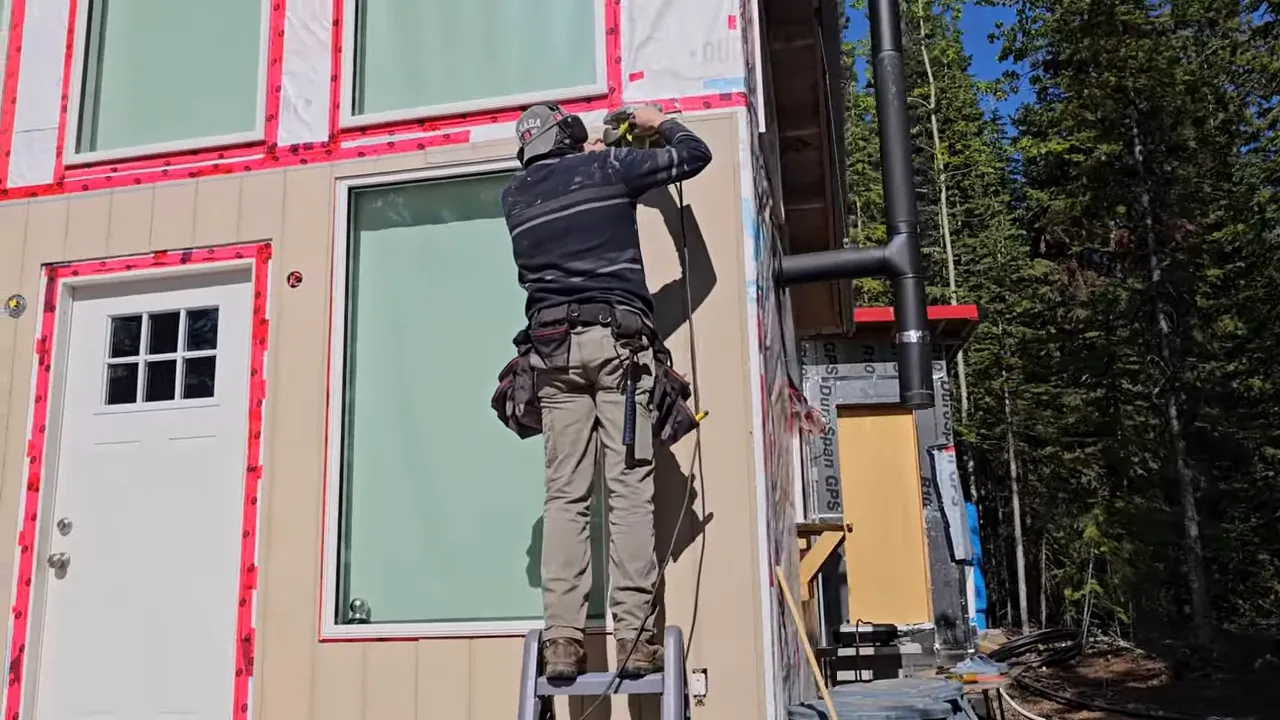
Cutting window openings brought another lesson in humility. Holding a saw overhead and trying to track a straight line is tiring and sometimes the cut wanders. When our saw strayed, we reminded ourselves that small mistakes can be mitigated—trim hides a lot, and there’s always room to recut a little lower. Precision matters, but so does adaptability.
Garden Work: Greenhouse, Orchard, and Mosquito Strategies
Outside the cabin we’re building a little ecosystem. We have four fruit trees on the upper rock ledge and are soaking each one about 20 minutes when we water. The nursery advised weekly deep watering while they establish. Seeing the trees in full bloom already feels like a small victory for our off grid homestead.
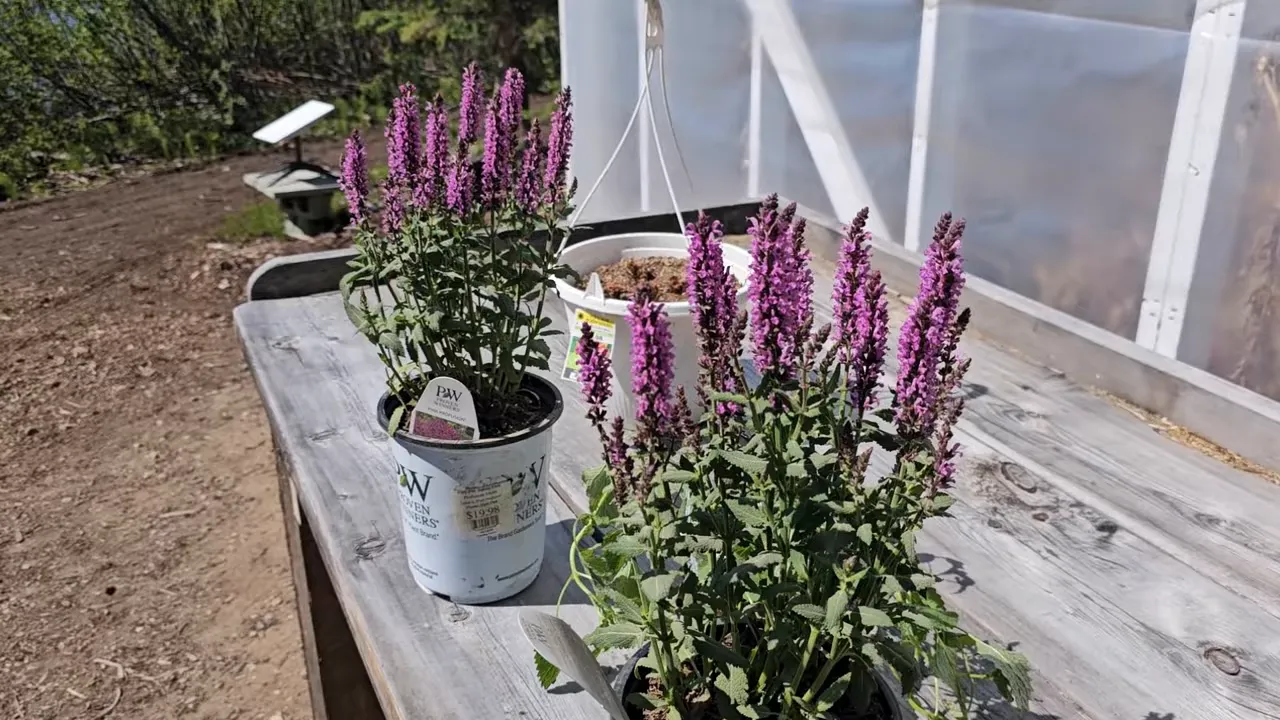
Closer to the greenhouse, we planted lavender and lemon balm in pots. These are not just pretty additions; lavender and lemon balm are known to deter biting insects and attract pollinators. Alongside our mosquito magnet, these pots create a localized zone that helps preserve sanity on warm evenings. We’re also transplanting peppers and tomatoes into buckets and beds to get our edible garden moving for the season.
Working Without a Shop: Makeshift Solutions and the Value of a Quonset
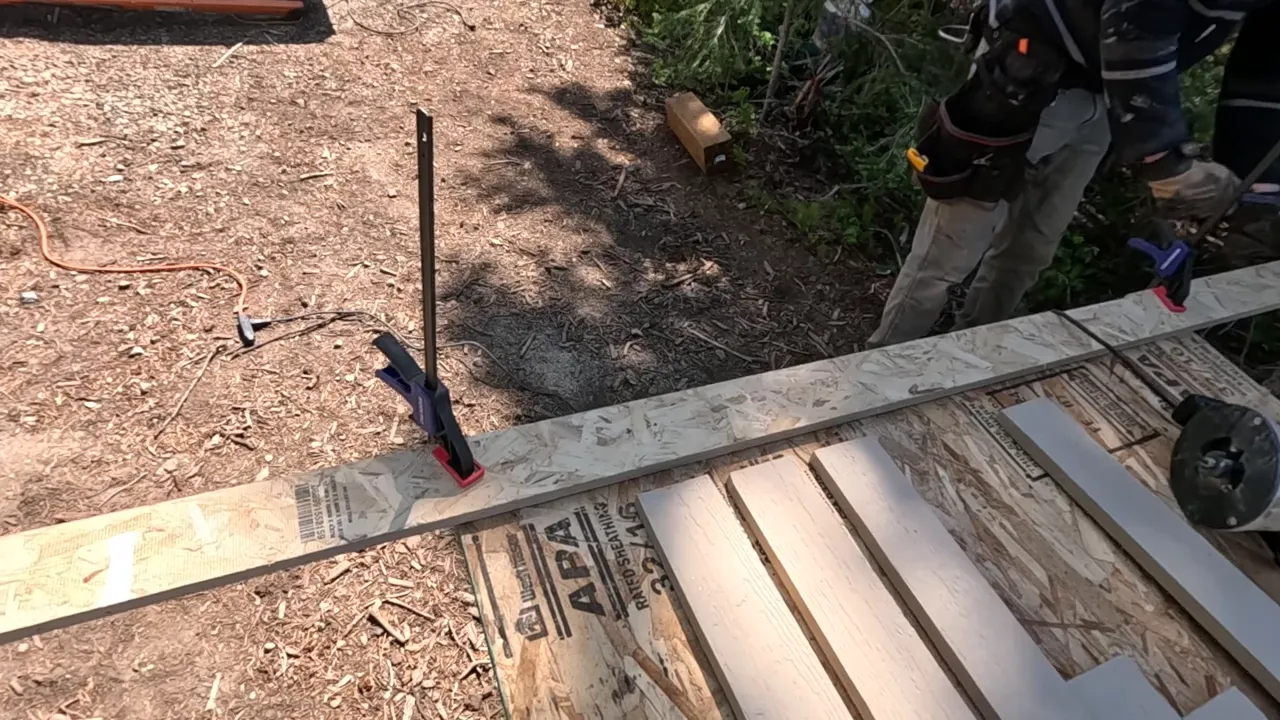
We bought a Quonset-style shop before moving to the island, but it’s still stacked on pallets. Without it, our “shop” is wherever we can set up sawhorses and clamps. That means awkward overhead cuts, tools balanced on uneven surfaces, and occasional improvisation—like using gravity-fed water instead of pumps for potting. Getting that shop erected will be a game changer for organization and weatherproofing our work.
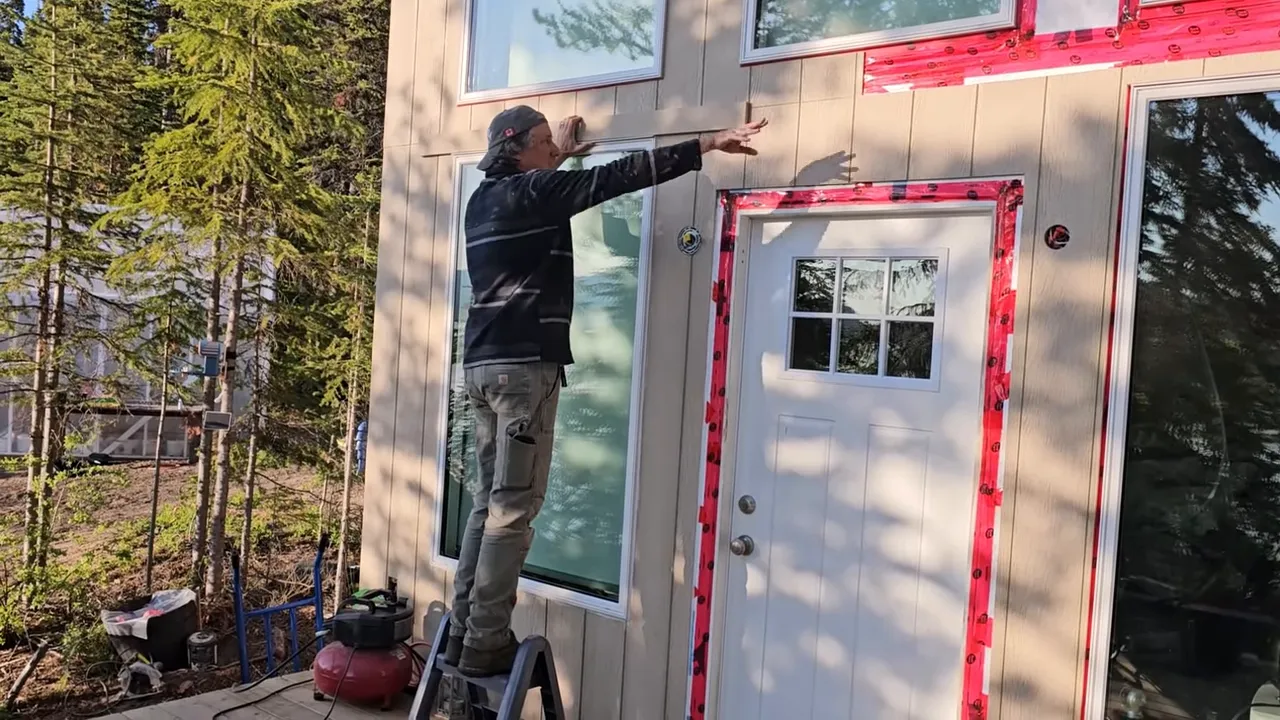
Despite the makeshift setup, we keep an eye on finishing details: a quick air blast clears sawdust, then we caulk seams to prepare for paint. Those little steps compound into a clean, finished look that holds up against wind, rain, and the long Canadian winters.
Height Work and Safety: Respecting the Risks
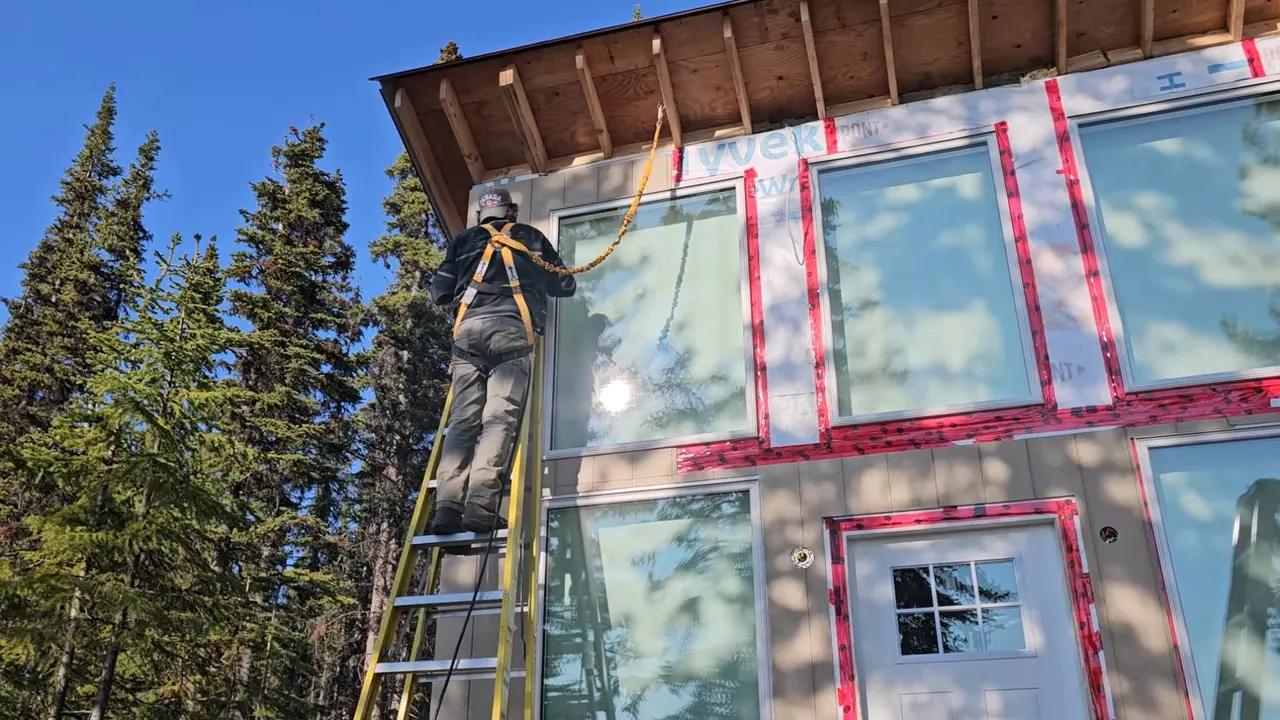
After a fall last year, we approach height work with more caution. Extension ladders, proper harnesses, and deliberate movement matter more now than ever. Even simple tasks like holding a ladder for a partner are part of how we make sure both of us come down in one piece. Safety is not glamorous, but it is essential for staying on site and continuing the build.
Paint and Transformation: What a Coat Can Do
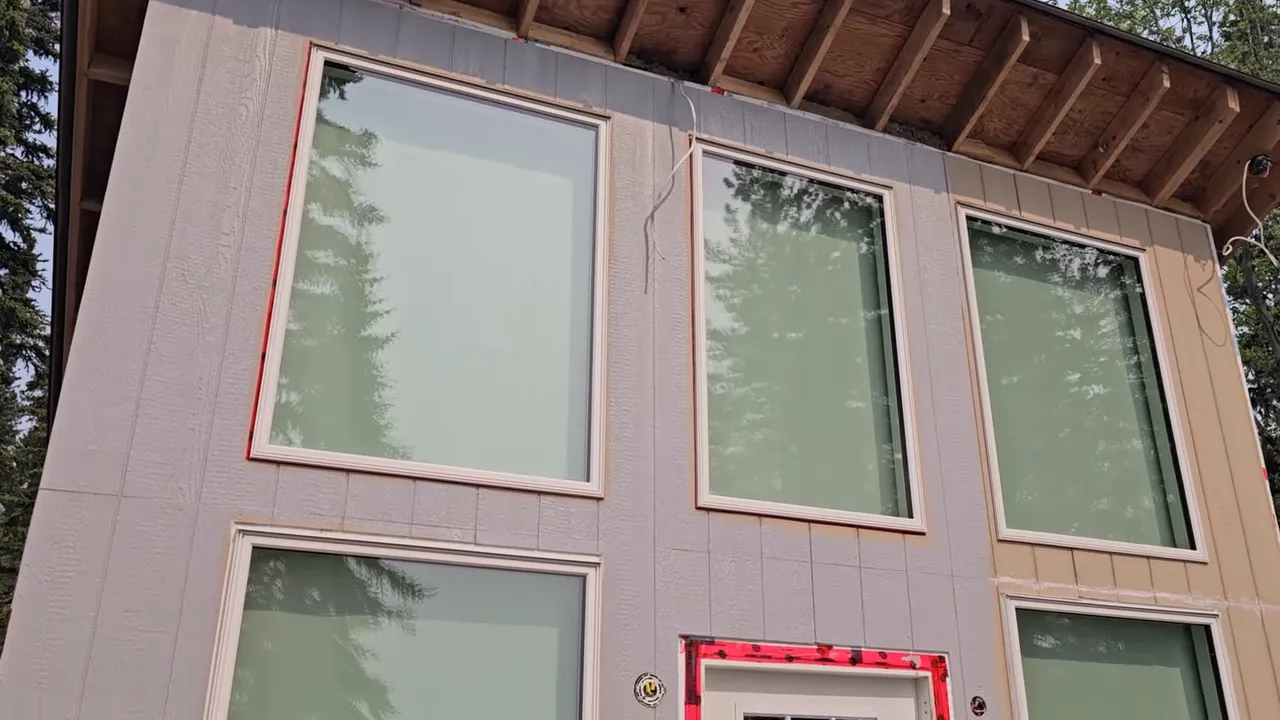
Painting is where the cabin finally starts to feel like a home. We used pre-primed combed-face smart trim to save time and rolled the body in a muted gray that complements our birdbath and the surrounding trees. Under wildfire smoke we suited up with respirators and kept painting—off grid life keeps going even when conditions are less than ideal.
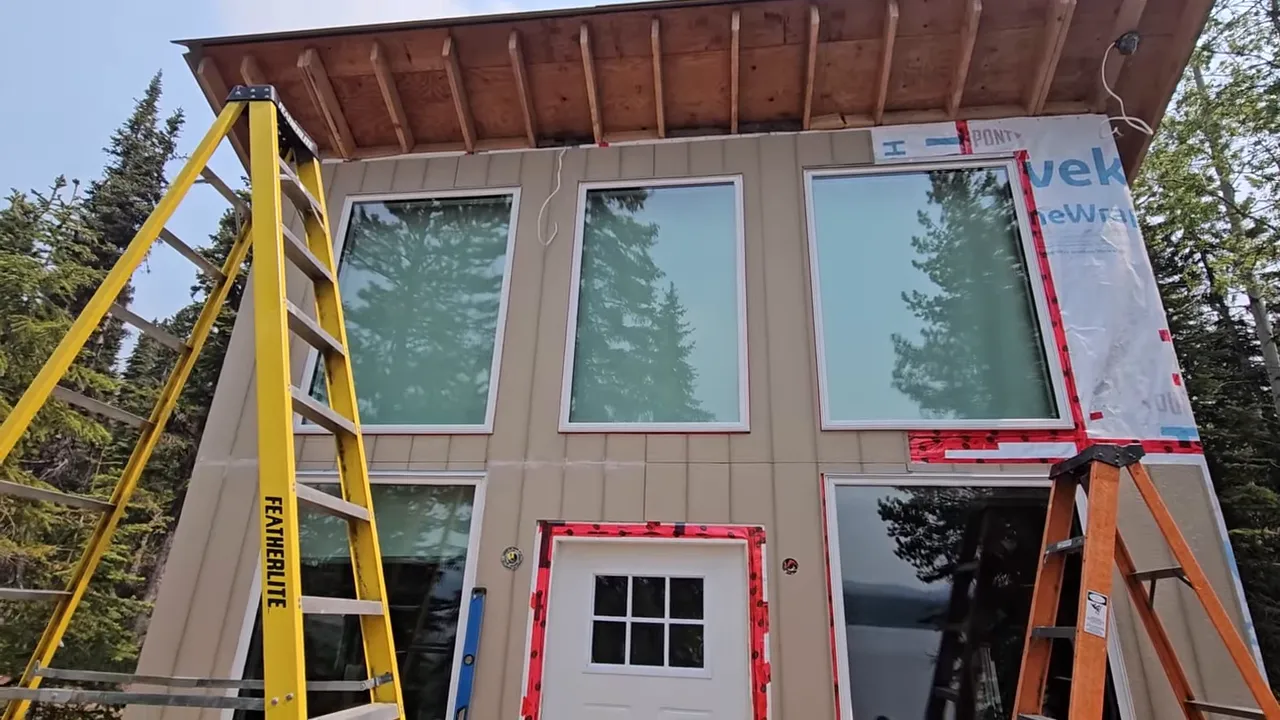
Watching the first coat go on is one of those small, satisfying moments. The color ties elements together, hides previous visual clutter, and reveals the silhouette of the cabin against the treeline. For us, painting is the visible payoff for weeks of meticulous prep.
Balancing Building and Living: Choices We Make
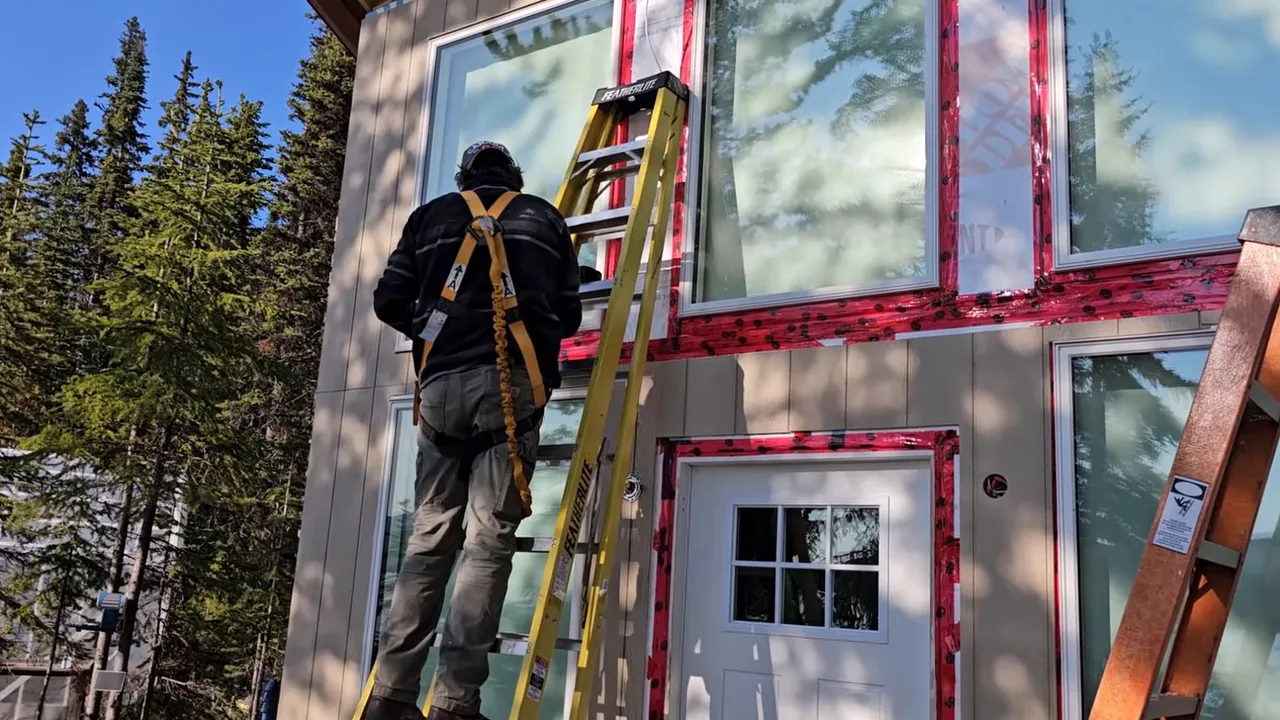
There’s a constant tug between stopping to enjoy the day and pressing forward to finish work. On this day we chose to keep moving—one more siding panel, one more coat of paint—so the cabin could better withstand weather and be more comfortable sooner. Fishing will wait; the long-term benefits of finishing tasks often win out.
We also make room for each other. Living in tight quarters while building means prioritizing small rituals: down days to recharge, time together off tools, and shared meals. Those choices keep the build sustainable and the morale high.
What We Learned and What’s Next
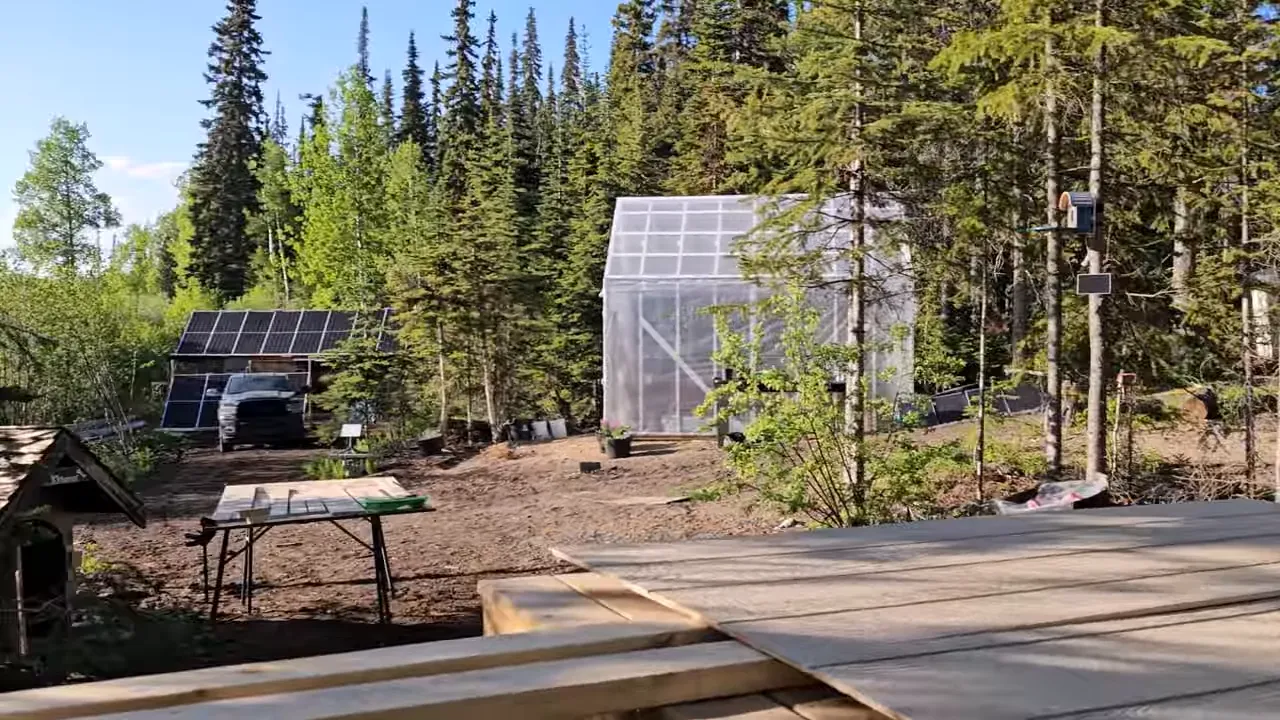
Every project teaches us something: the right bit makes routing manageable, lavender and lemon balm can help with biting insects, and a simple coat of paint changes everything. Going forward we’ll erect the Quonset shop, keep painting and trimming, and expand the garden beds and orchard as trees set fruit.
Our tiny cabin is more than a structure; it’s the start of a broader off grid life—an island homestead where small decisions make daily living more comfortable and resilient. The work is deliberate, the pace steady, and the rewards clear when we stand back and look at what we’ve created together.
Favorites and gear we use are available on our favorites page and Amazon store. We also share updates and photos on Facebook, Instagram, and Pinterest.
Tags: #Off Grid Life #Remote Island Homestead #Tiny Cabin #Off Grid #island homestead #mosquito magnet #lavender #siding