Off Grid Cabin Build: Facing Fears on Homemade Scaffolding After My Bad Fall
Off Grid Cabin Build, Homemade Scaffolding, and pushing past fear after a bad fall… all on our Remote Island Homestead in northern BC. When we bought this island in 2022, we knew nothing about building. Now we’re Building Off the Grid for real—trim, siding, barge maintenance, Off Grid Gardening, and a Homemade Scaffolding setup so Ryan can safely work at heights again after last year’s helicopter medevac.
Table of Contents
- Window Trim and Working at Heights — Off Grid Cabin Build
- Making a Dog House Feel Like Home — Remote Island Homestead
- Corner Capping and Exterior Trim — Tiny Cabin Build
- Garden and Fruit Tree Wellness Check — Homestead Projects
- Barge Inspection and Water Management — Off Grid Life
- DIY Scaffolding Build for Safe Work at Heights — DIY Scaffolding
- Putting It All Together and Next Steps — Off Grid Cabin Build
Window Trim and Working at Heights — Off Grid Cabin Build
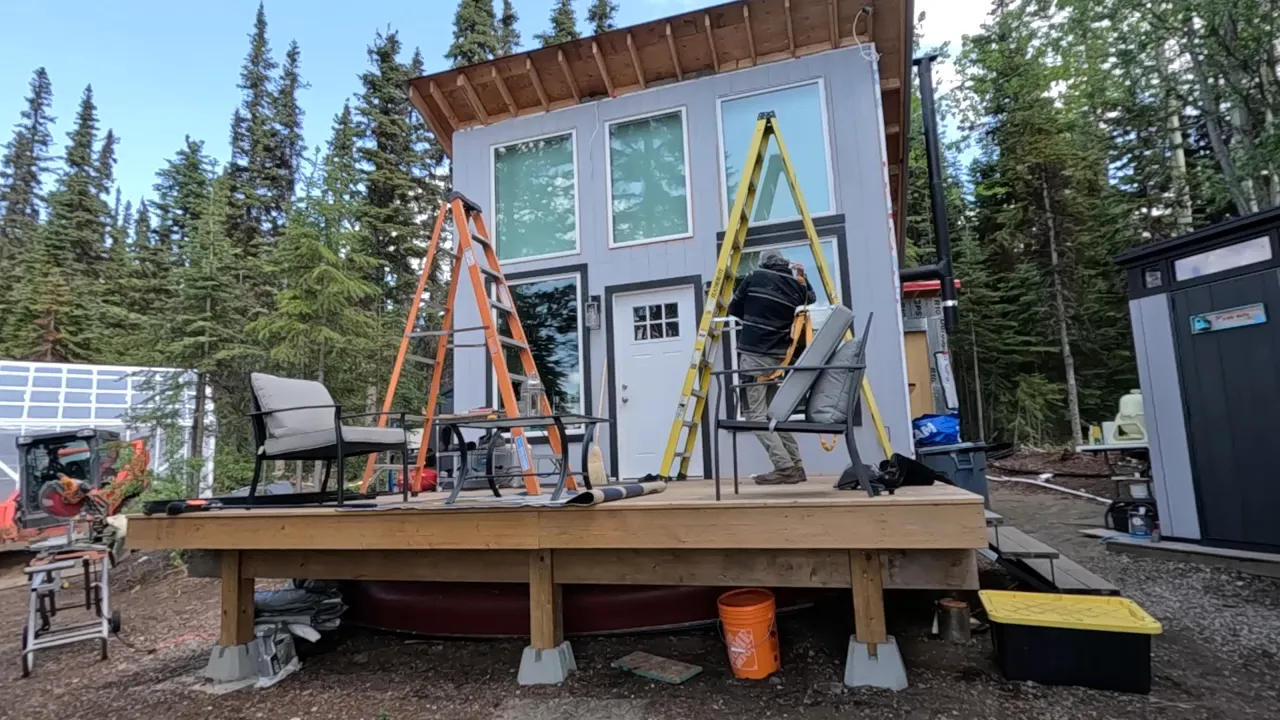
We’ve learned that finishing details make a cabin feel finished. One of the tasks that demanded care this week was installing window trim while keeping safety front and center. After a bad fall last year, we now tie off for any work at height. That means harnesses, fall arrest gear, and planning each move before we climb.
Trim needs precise measuring—every window was slightly different—so there’s no production cutting. We test fit, trim, re-fit, and caulk where the trim meets the glass to create a long-term waterproof barrier. It’s tedious, but the result is worth it: small details that make the whole wall click into place.
Making a Dog House Feel Like Home — Remote Island Homestead
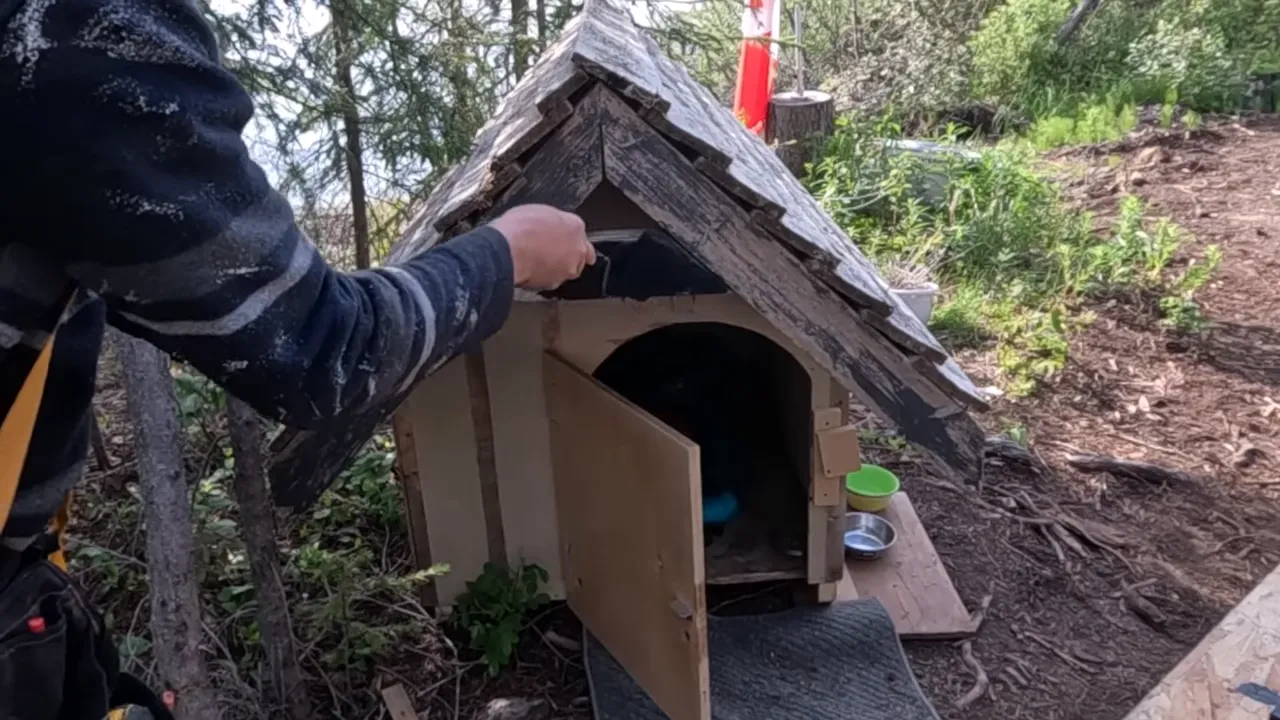
Pets are family, and we wanted Opal’s space to feel like hers. The little dog house needed more than function; it needed ownership. We sanded and painted over the previous name above the door and added some finishing touches so the shelter feels fresh and personal.
This matters because homestead life isn’t just about structures. It’s about creating safe places for every member of the family. A small gesture—new paint, a few boards fastened neatly—can change how an animal accepts a space.
Corner Capping and Exterior Trim — Tiny Cabin Build
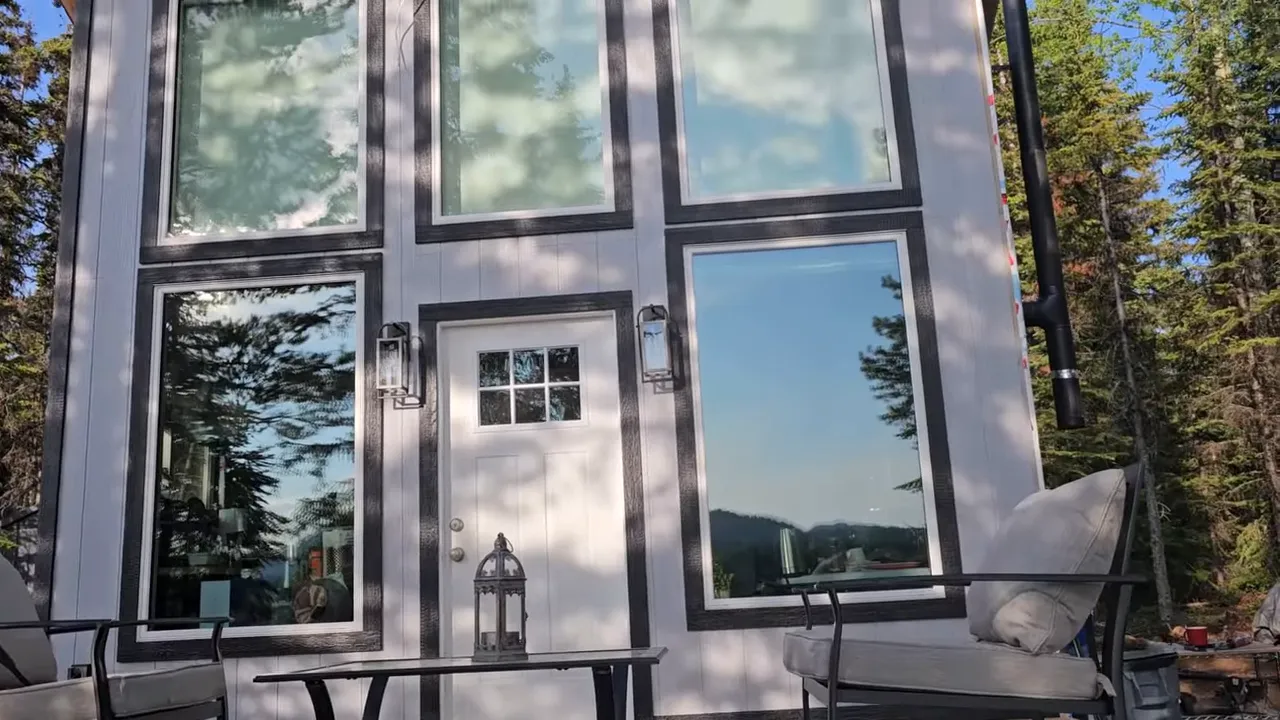
Instead of mitering panels at the corners, we chose to cap the corner faces. This method is more weatherproof and stronger against the elements. The darker trim we selected frames the cabin and gives it that “finished” look we were after.
Trim isn’t glamorous work, but it is transformative. A few boards, properly nailed and sealed, switch a structure from “shelter” to “home.” That’s the payoff for slow, careful finishing work on an off-grid build.
Garden and Fruit Tree Wellness Check — Homestead Projects
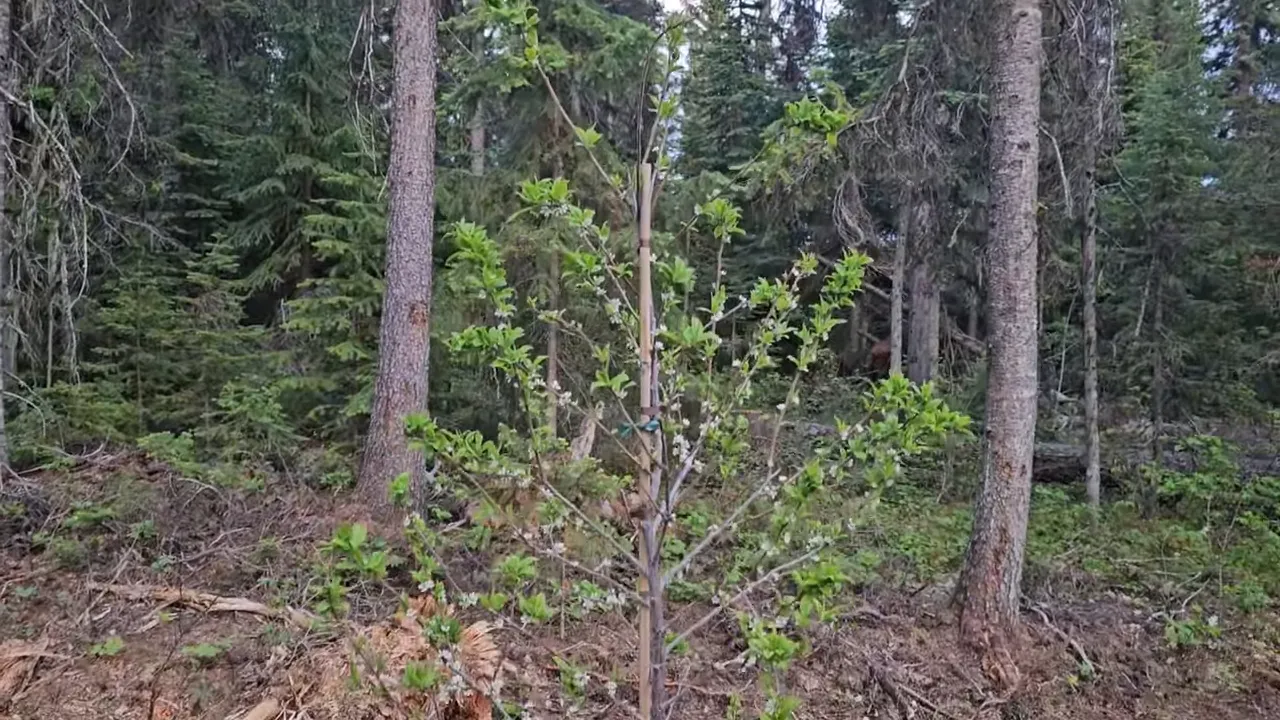
Our plants get a lot of attention; even planted under less-than-ideal conditions they still show resilience. We did a regular wellness check on tomatoes, berries, grapes, and a couple of young apple and plum trees. Some saplings were barely alive when we planted them, yet they’ve perked up enough to stay and be watched closely.
We’re planning to add more edible shrubs like saskatoons and create better supports for vines. Mulch and wood chips will help retain moisture and suppress weeds. Small investments in the garden now pay dividends for food security later.
Barge Inspection and Water Management — Off Grid Life
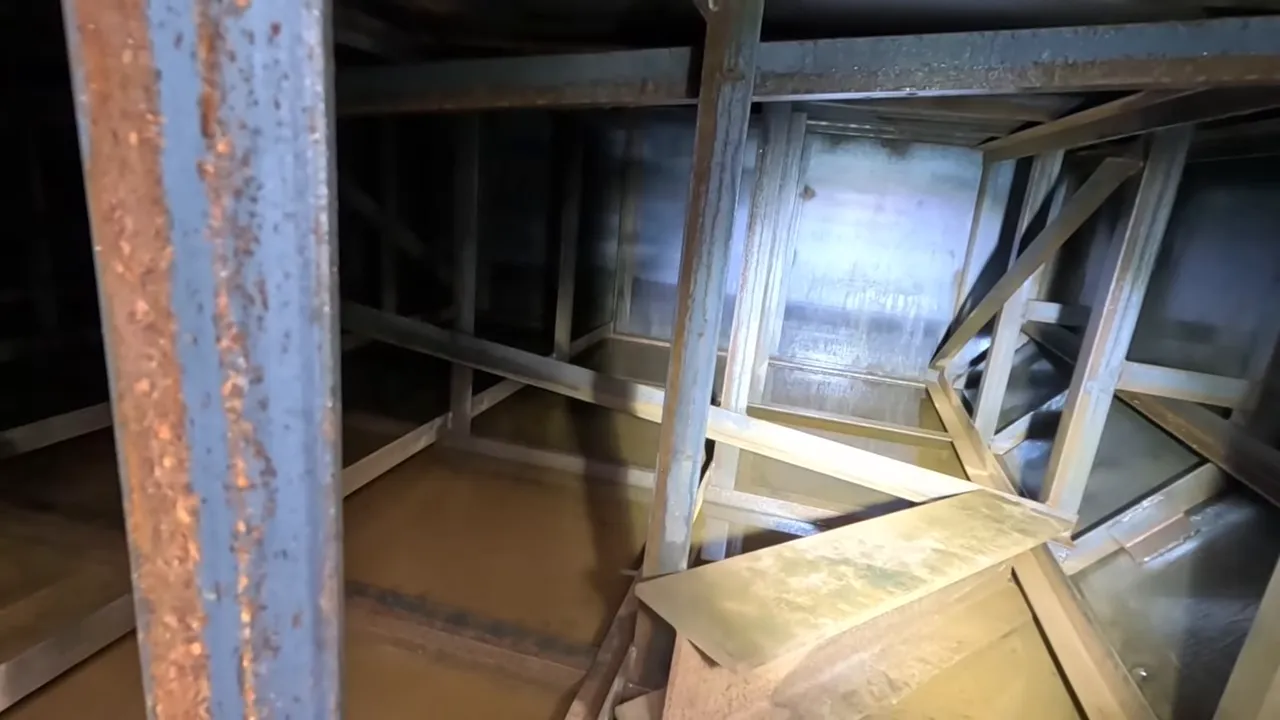
Maintaining equipment is a regular part of island life. We suspected some water in the barge hull and did a hands-on check. There was a small amount of water but not enough to indicate a leak. The fix was simple: tilt the barge, collect water under the hatch, and run a small pump until the bilge was dry.
Routine checks like this protect our transport and storage. A small pump, a charged battery, and the right plan keep the barge serviceable. After cleaning, we plan to coat the interior with a protective product to slow rust and wear.
DIY Scaffolding Build for Safe Work at Heights — DIY Scaffolding
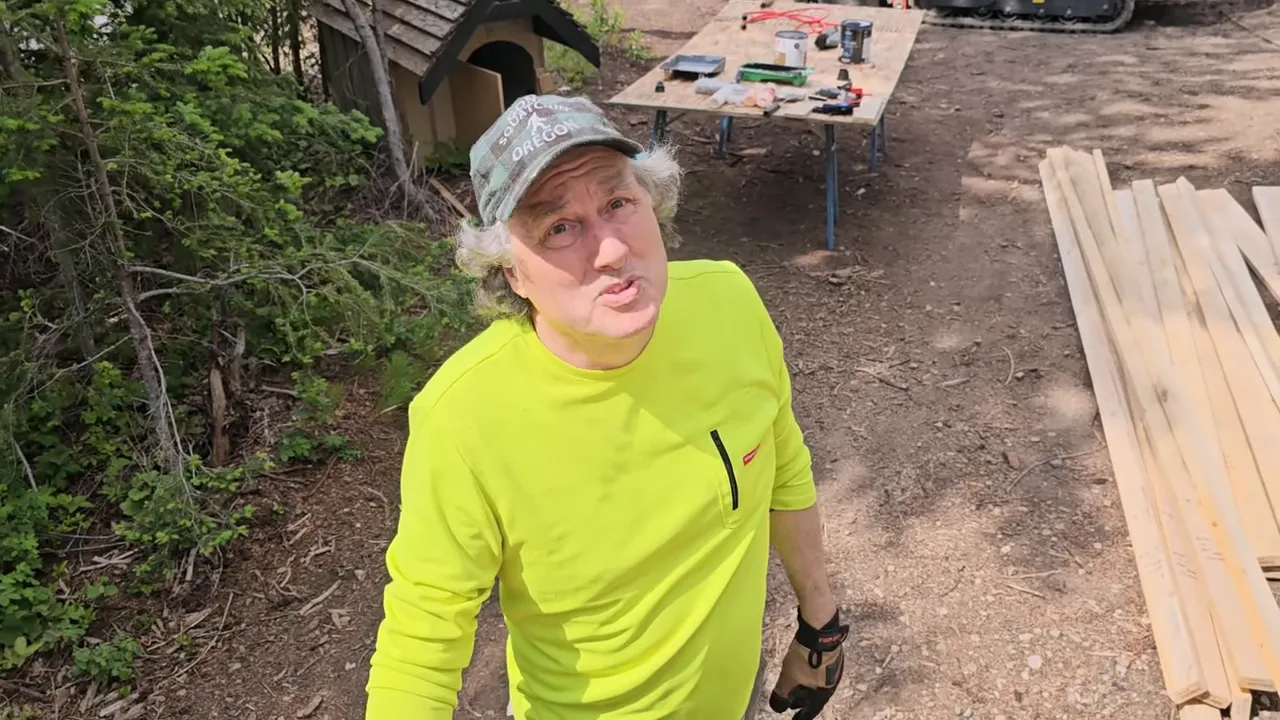
Commercial scaffolding is great, but remote terrain and budget realities pushed us to build our own platform. We designed a 10-foot work surface, 19 inches wide, supported by cross members and braced with verticals. We used two supports spaced six feet apart and chose two-by-eights for a lighter deck that’s easier to assemble in place.
We favored nails over screws for shear strength where load bearing mattered, added handrails, and tied the platform back to the cabin for stability. Building our own scaffolding meant we could adapt to uneven ground and keep control of every connection. Most importantly, it let us get back to finishing soffits and fascia without risking another serious fall.
Putting It All Together and Next Steps — Off Grid Cabin Build

Bit by bit the tiny cabin is transforming from a shelter into a home. Trim, siding, scaffolding, garden beds, and maintenance tasks all add up to a functional homestead. We’ll be back with a sawmill on the next trip, which will change how we source lumber and speed up future work.
For now we keep focusing on safety, weatherproofing, and small victories. Each thoughtful decision brings the cabin closer to our long-term vision for a resilient, off-grid life. That’s the whole point: reliable systems, careful finishing, and the confidence to climb back up and keep building.
Tags: #OffGridCabinBuild #DIYScaffolding #TinyCabinBuild #RemoteIslandHomestead #MyWildHolm #OvercomingFear #HomesteadProjects #OffGridLife