Remote Island Homestead: Season Finale — Chaos Before the Snow (Part 1) – My Wild Holm S3 Ep35
Snow is on the way, the wind is howling, and everything’s in disarray. This episode is a full-on scramble: moving beach solar racks to higher ground before lake levels rise, loading a massive battery bank, draining water systems, and packing our gear for departure—all while planting apples, plums, and grapes to start our first off-grid orchard. 🌱⚡
Table of Contents
- Season Finale Setup — Weather Turns, Plans Unravel
- Mapping the Orchard — Apples, Plums & Grapes
- Moving Solar Racks Off the Beach — Higher Ground
- Hot Chocolate for the Crew — Morale Boost
- Near Miss — Moving the Truck Off-Island
- Fishing Rod Talk — Gear & Trolling Tips
- Saying Thanks… with a Bag of Broccoli?
- Planting Trees the Hard Way — Time is Running Out!
Season Finale Setup — Weather Turns, Plans Unravel

We kicked off the day with the island in disarray: gear everywhere, a broken storage bin from a previous fall, and small leaks that remind us how finite our off-grid comforts are. We were racing the clock because a winter system is rolling in—wind, potential snow, and rising lake levels. Our first order of business: pack the truck, stage the barge, and get a plan in place to move the heavy stuff before the water rises.
Mapping the Orchard of our remote island homestead — Apples, Plums & Grapes

We picked a sunny, flat section near the old shelter as our first orchard. Soil here is sandy—excellent drainage but lean on nutrients—so we brought compost and a few bags of rich soil to give the young trees a fighting chance. We planted two apples, two plums, and six grapes before dark.

Because our climate is cool and unpredictable on our remote island homestead, we focused on hardy varieties that suit zone 2B. To guard the fruit from wildlife, we’re planning a simple one-line temporary electric fence to deter bears—after all, we had our first bear sighting this season and the memory of Opal’s efforts to tree that bear will not fade away anytime soon!

One of the most urgent jobs was moving the beach solar racking. The lake level rises several feet in winter; these racks would float away if we left them. With the boom lift, Pepper the Kubota, and some strong neighbours, we had both small beach arrays unbolted and stowed on higher ground before the water crept up.

We also staged the huge solar batteries in the truck to take to deep water access. Those batteries are heavy—handling them safely meant relying on friends and a methodical load plan. This is off-grid life: planning, teamwork, and respect for heavy components like the solar battery bank and inverter systems.
Hot Chocolate for the Crew — Morale Boost
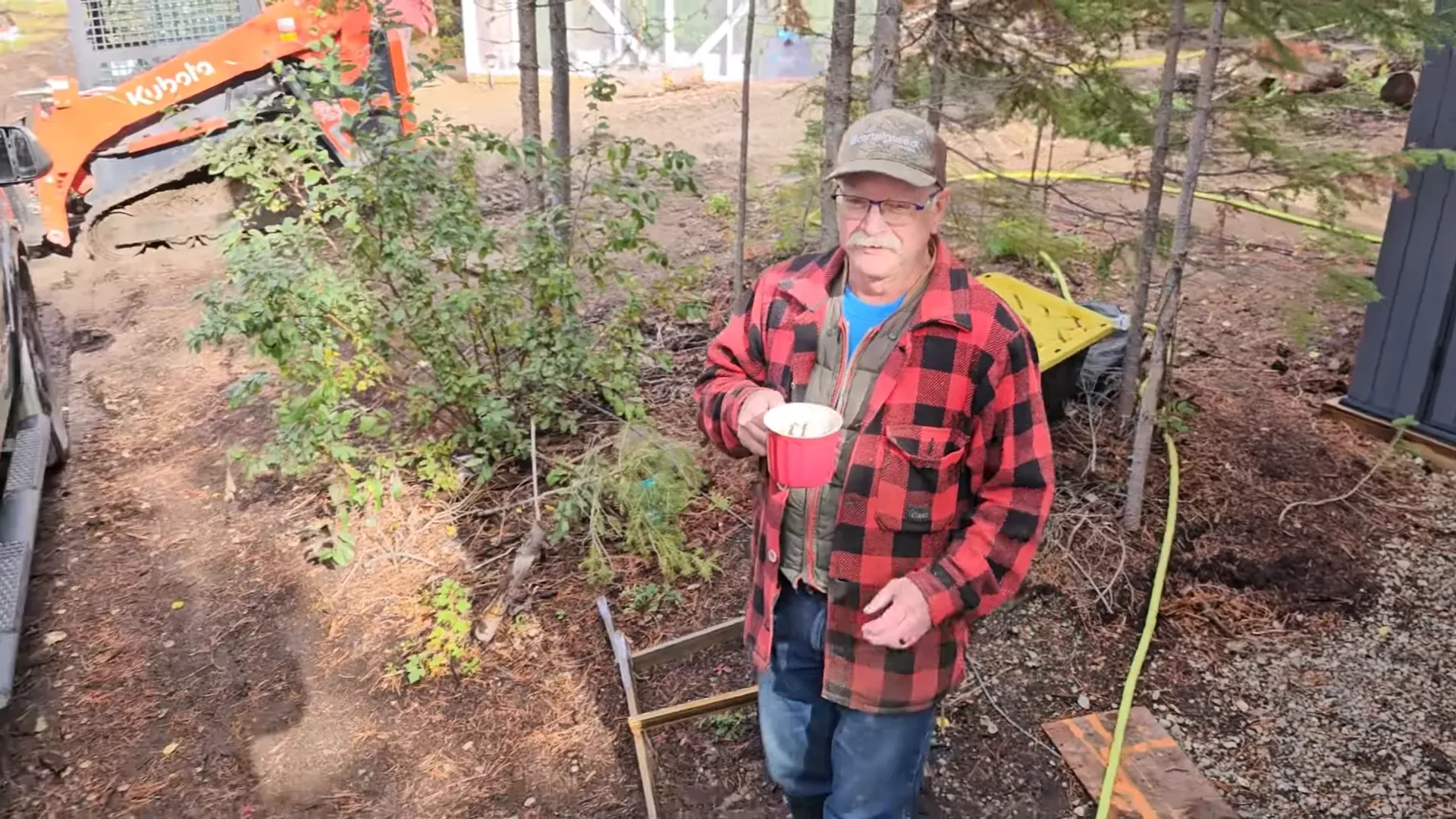
When the cold settles in and hands are numb, small comforts matter. Melodi brewed hot chocolate (with an ice-cream-sundae twist) and handed mugs to Kerry and Chris, our trusted helpers. Fueling morale is as important as tackling the physical work—this is how teamwork and community keep off-grid projects moving.
Near Miss — Moving the Truck Off-Island

The barge run to move the truck and trailer tested our nerves. A gust can turn a parked barge into a big sail; this time, our crew kept cool and prevented a collision with Kerry’s boat. It was a reminder that water and wind are unpredictable—especially on a big, open lake.
Fishing Rod Talk — Gear & Trolling Tips
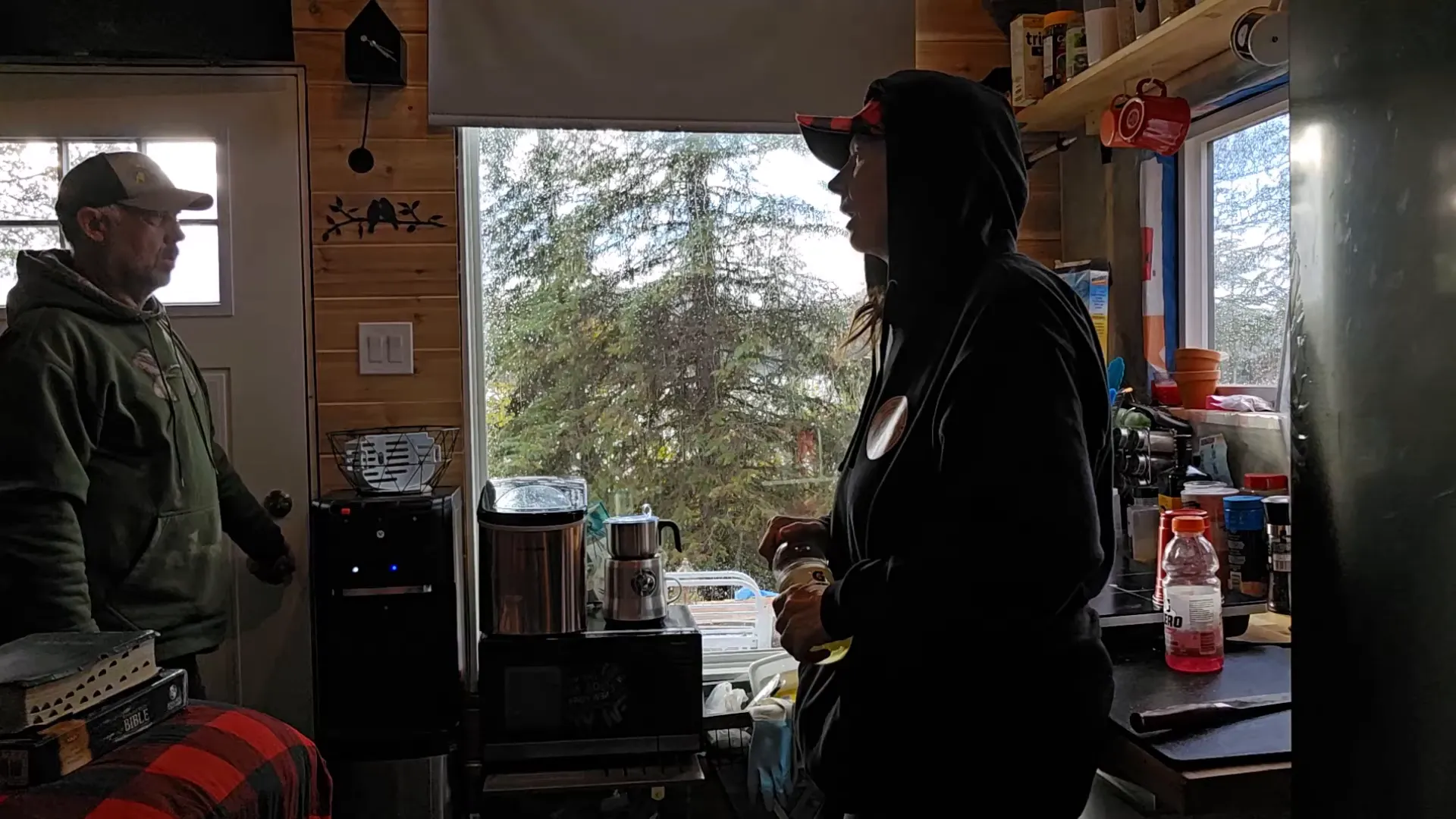
Between shovels and straps, we chatted about fishing gear. For trolling lake trout and rainbows in warm months, you want a heavier rod and, often, lead-core line that sinks without extra weights. Practical conversations like this matter to homesteaders: food sustainability through fishing is a cornerstone of our off-grid life.
Saying Thanks… with a Bag of Broccoli?
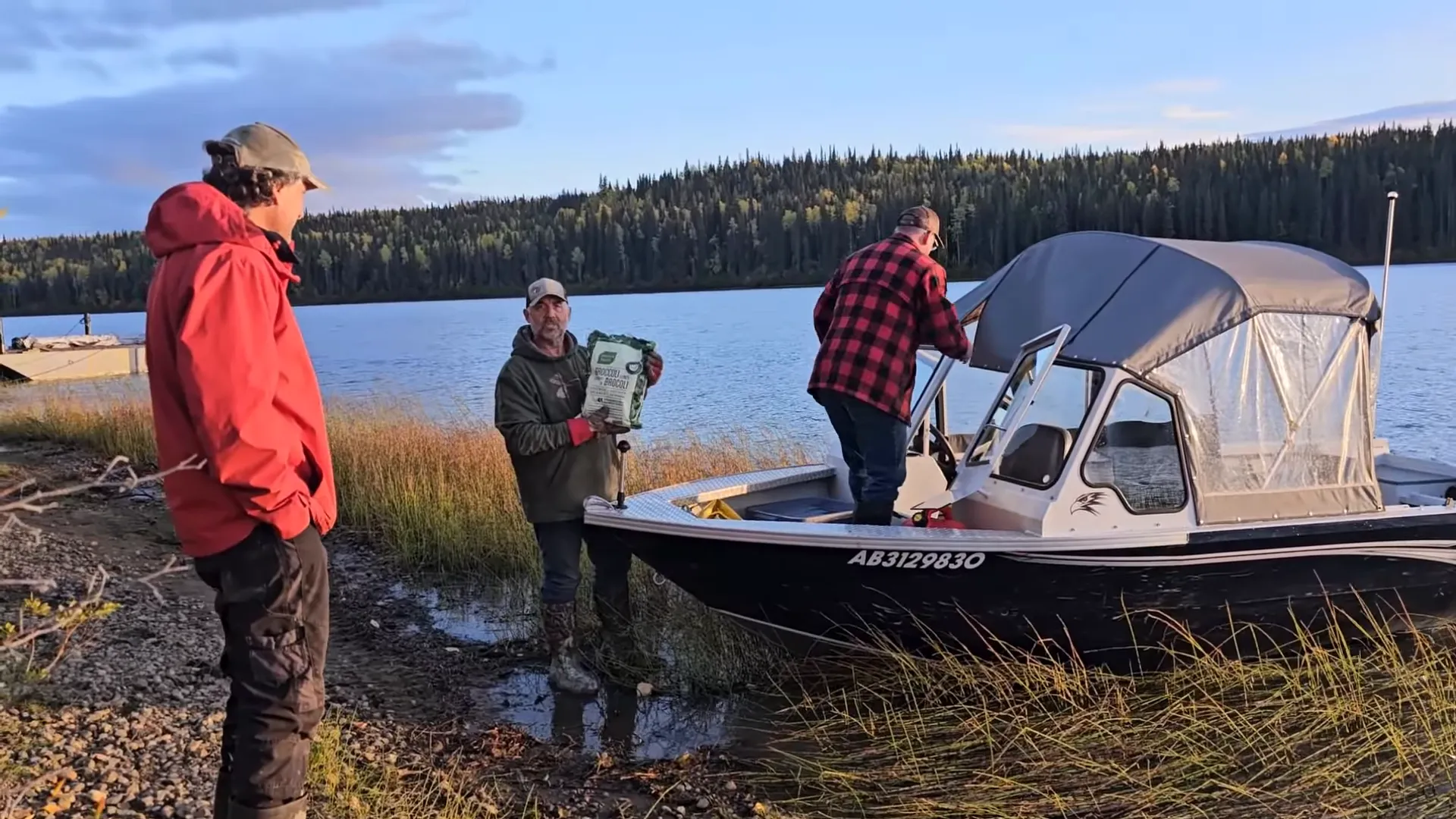
When neighbours drop everything to help, gratitude goes a long way. We handed Kerry a big bag of Costco broccoli to say thanks. He was delighted! We couldn’t have closed up the island for winter without them—there simply aren’t words.
Planting Trees the Hard Way — Time is Running Out!
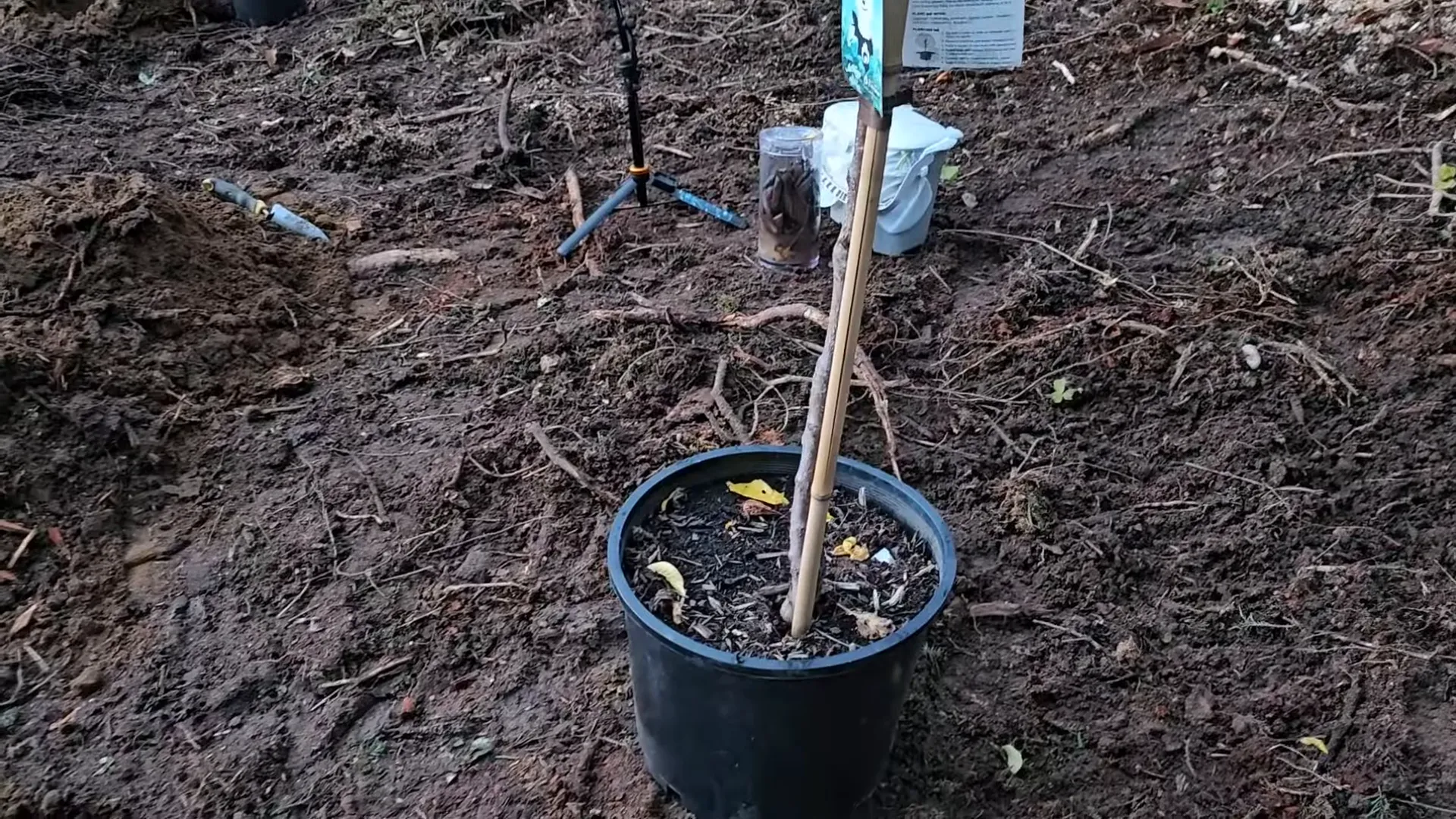
With daylight dwindling and snow in the forecast, we hustled to plant the last trees. Holes needed to be twice the container size and about two feet deep. With back spasms and limited muscle, we improvised—using a small auger, native sand, compost, and whatever organic scraps we had (banana peels included) to give these trees some life.
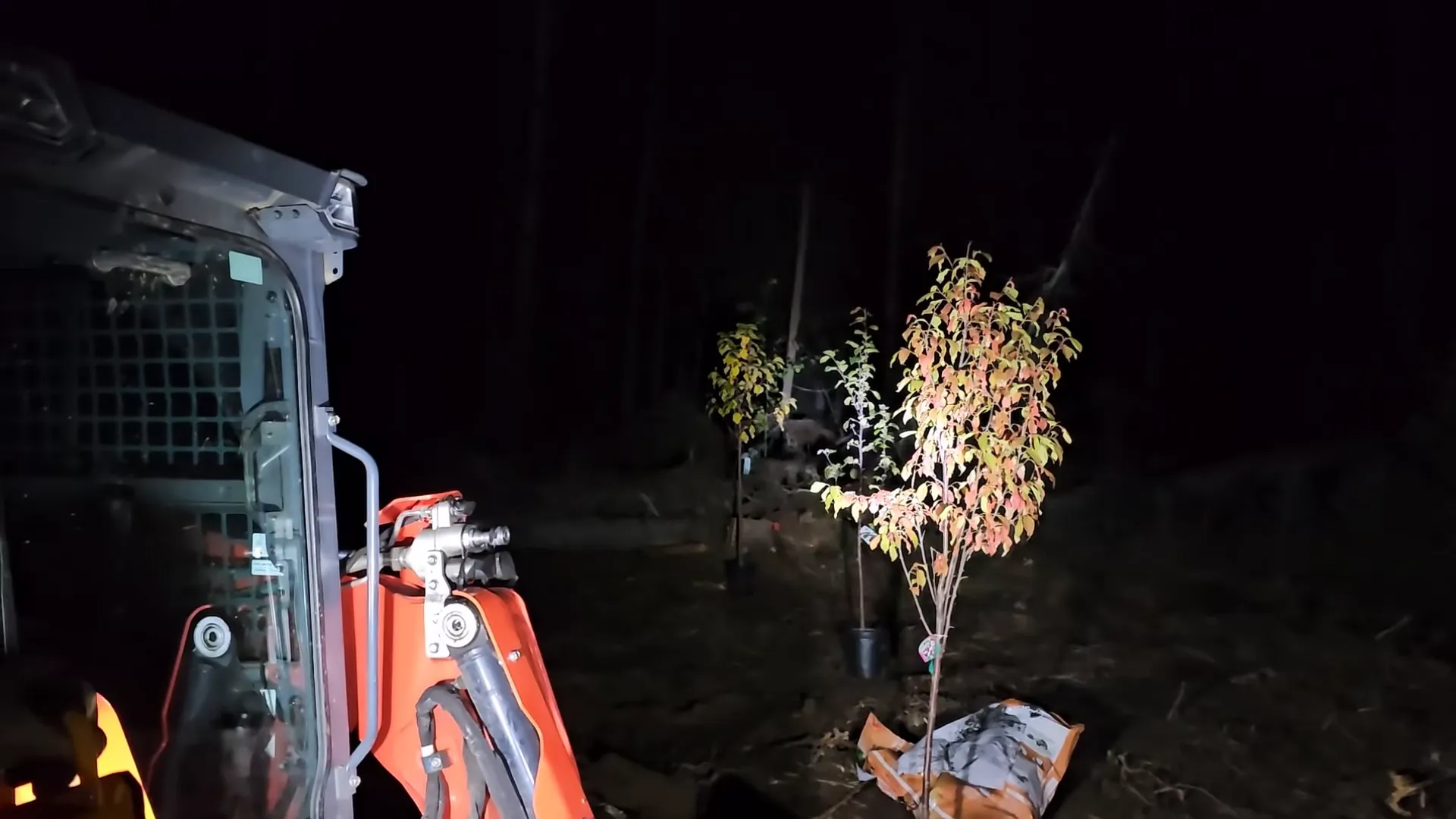
These saplings are more than plants; they’re a step toward food independence. We know the soil will need care and later irrigation, but planting now gives us a head start for the season ahead. We left the island tired but satisfied, knowing the hard work will pay dividends down the line.
Practical Takeaways for Off-Grid Homesteaders
- Plan for water level changes: move low-lying gear like solar racks before snowmelt and lake rise.
- Bring help for heavy lifts: battery banks and pumps require more than two hands—neighbours are gold.
- Plant hardy varieties: in cold climates, prioritize rootstock and varieties suited for zone 2B.
- Short-term protection: a one-line electric fence can protect young fruit from wildlife until permanent measures are in place.
Resources & Links
Shopping and resources we use and recommend: My Wild Holm’s favorites list, our My Wild Holm Amazon Store, and our merchandise store on YouTube. Follow us on Facebook and Instagram for more photos and updates.
We hope this recap gives you practical ideas for solar winterizing, staging a move, and launching a small orchard in a cold, remote setting. Thanks to Kerry and Chris for the muscle and for being reliable neighbours who always show up when needed. See you in Part 2—where the season close becomes even more of a test!
#RemoteIslandHomestead #OffGridLife #CanadianWilderness #OffGridWinterPrep #SolarBatteryBank #WildernessResilience #HomesteadOrchard #MyWildHolm